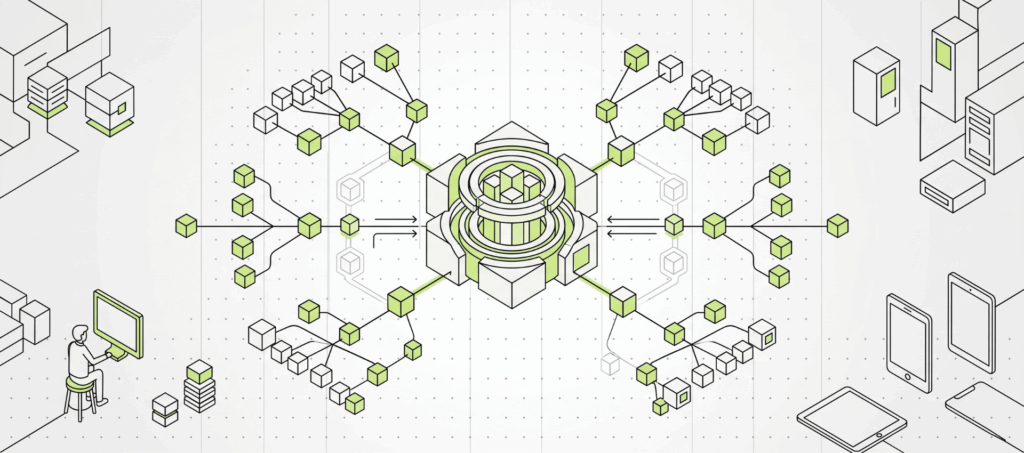
For three different clients from different industries, it wasn't the platform choice that proved to be the most expensive and most blocking element of implementation, but the state of product data. Source data resides in PDFs from suppliers, in paper catalogs, and in the heads of salespeople, and companies lack the resources to transcribe it manually. Data extraction from documents, OCR, and AI enrichment can turn weeks of such work into days. This article shows what this looks like in practice and what to check before starting the implementation.
Why does product data cost more than platform selection?
A company planning an e-commerce or PIM implementation typically begins by selecting a platform and vendor, treating product data as something that will "somehow" be imported at the end. In the projects we've worked on, the opposite is true. For three different clients from different industries, the most expensive and most blocking element of implementation wasn't the platform, but the product data.
One client pays us separately for data extraction from supplier PDFs. Another made the entire AI agent POC dependent on whether the data complies with the ETIM standard and whether OCR correctly reads scanned product cards. A third commissioned a separate AI tool to map, validate, and enrich data coming from multiple sources simultaneously. In none of these three cases did the conversation begin with a question about the platform.
Where does your product data actually reside?
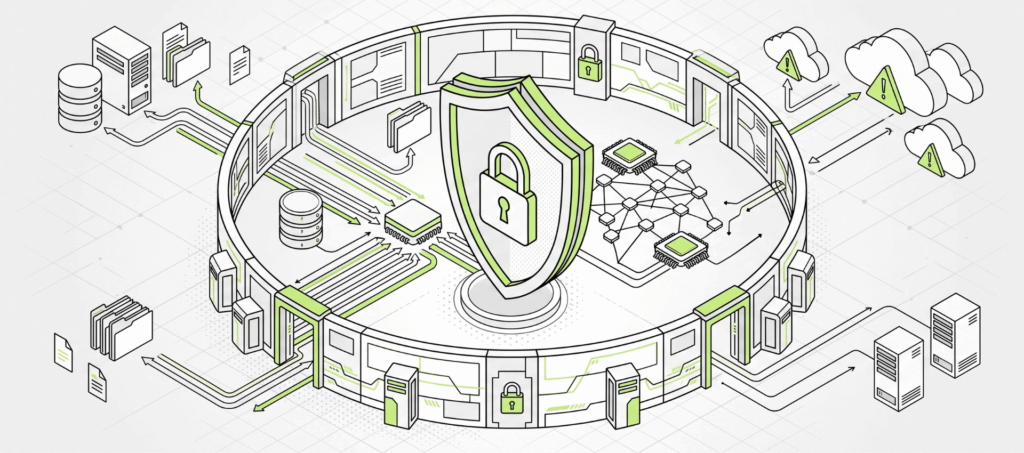
They rarely reside where the company would like: in a single, ready-made export file. They're usually scattered across three places at once. Some data resides in PDFs from manufacturers and distributors: catalog sheets, price lists, technical specifications, sometimes simply scanned. Some resides in paper or electronic catalogs that have never had a standardized format. The rest exists solely in the minds of salespeople who spent years learning which parameters are important to the customer and how to describe them.
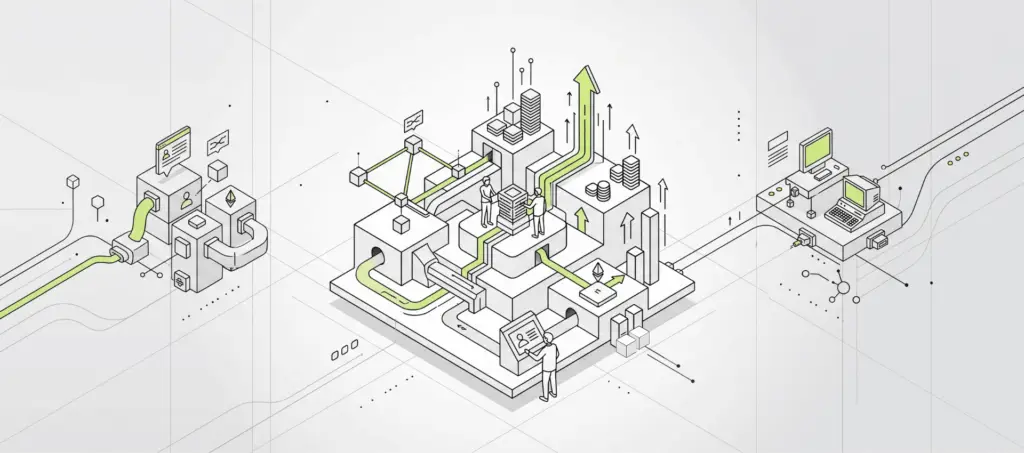
A standard CSV import assumes that the data is already waiting in a structured table. When product data actually resides in these three places, this step must be completed before any import makes sense – this is precisely the stage covered by Magento's integration with PIM systems , centralizing product data flowing from suppliers and manufacturers.
What do AI data extraction, OCR, and enrichment do?
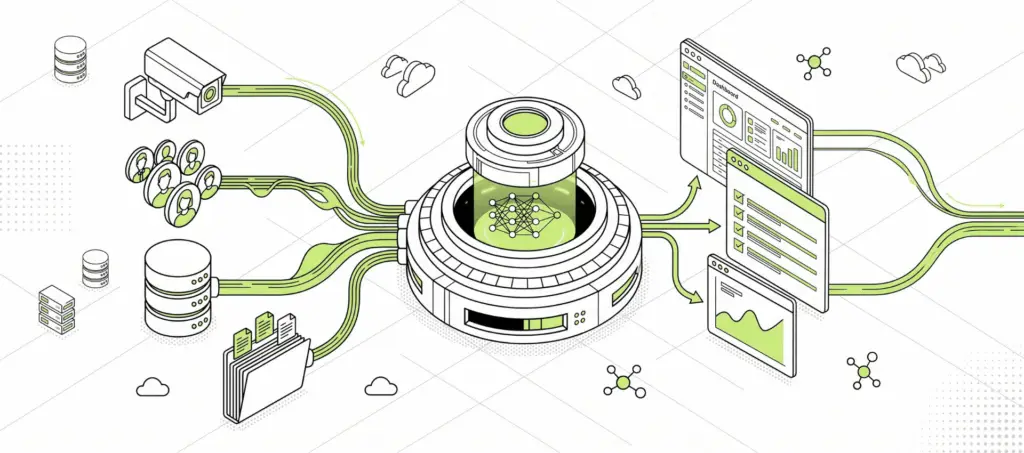
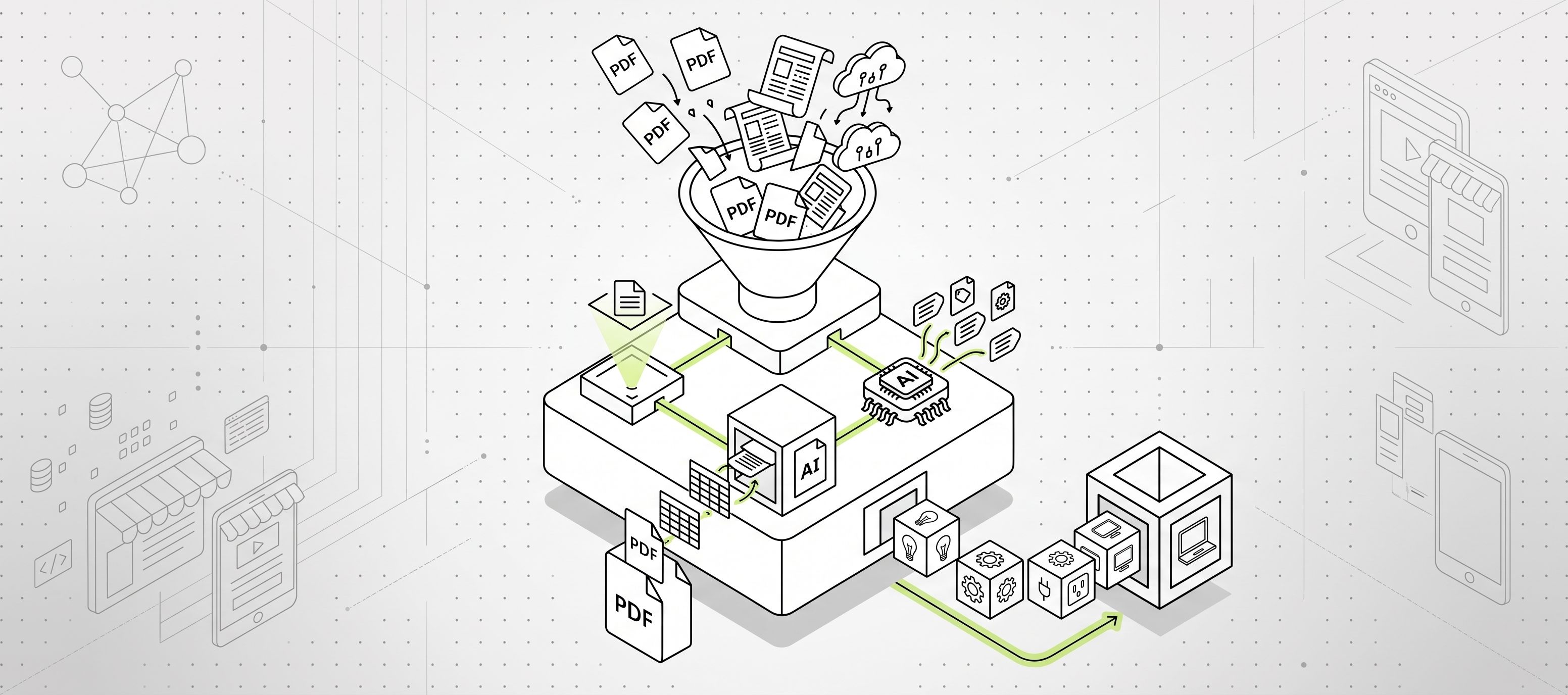
These are three separate steps that are often confused. Data extraction from PDFs extracts structural information from documents that have a repetitive structure: parameter tables, specification sections. OCR comes into play when the document is effectively an image, not text, i.e., with scanned catalog cards: without it, there's nothing to map, because the system treats the page as one large drawing.
Only after these two steps does AI begin enriching the data: filling in missing descriptions, translating manufacturer nomenclature into an internal attribute dictionary, and checking for compliance with industry standards where the company uses them. This is precisely the set of steps that one of our clients pays for as a separate tool, not as an add-on to a platform implementation.
How much time does this actually save?
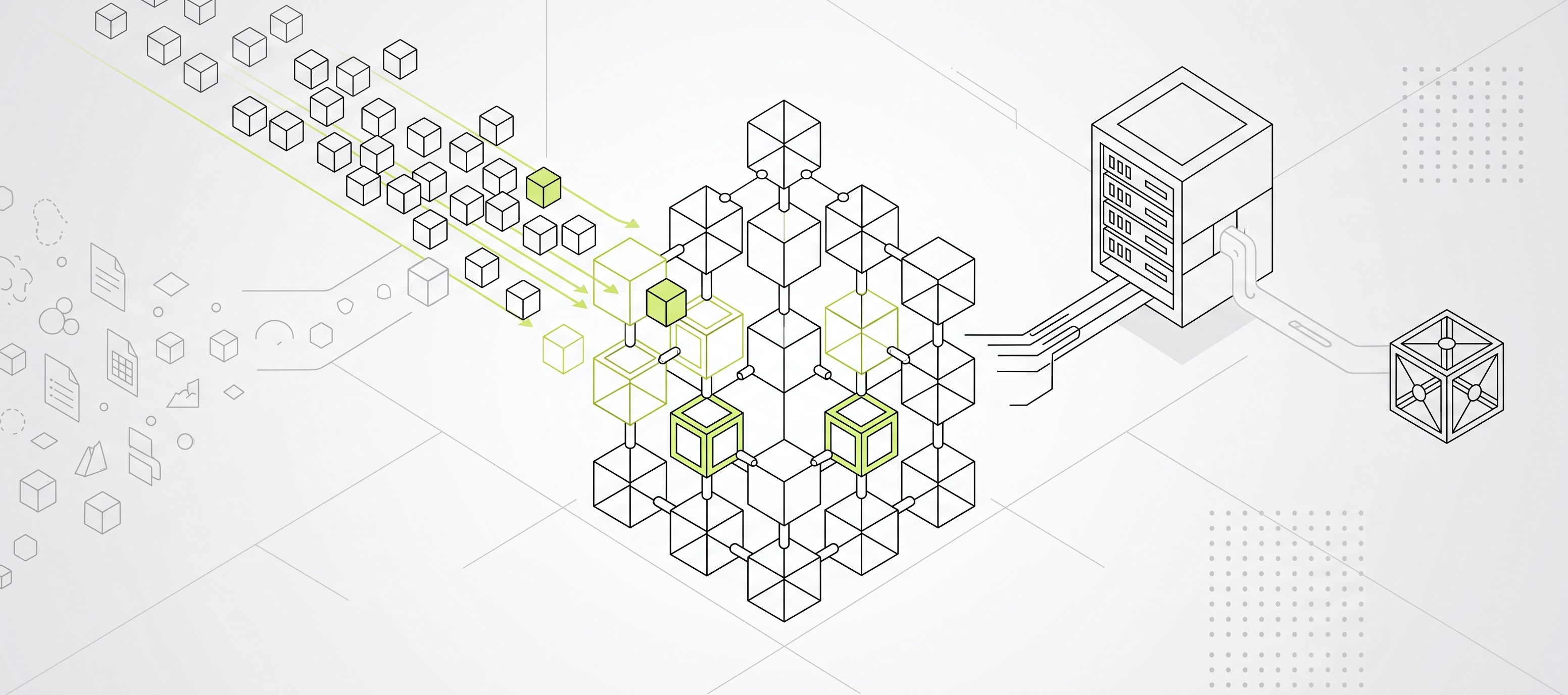
In our experience, what would take weeks manually can be completed in days, not weeks, with well-organized extraction, OCR, and AI enrichment. The difference comes from the fact that manual rewriting scales linearly with the number of products, and once established, the extraction and mapping process runs just as quickly for 100 as for 10,000 items.
Product data is a prerequisite for implementation
Choosing a platform is a one-time decision. Product data must be checked for every new supplier, every catalog update, and every new market the company enters. If this topic is treated as something that "self-imports," it returns at the very moment when it causes the most harm: during the implementation itself.
Before you choose a PIM tool or vendor, check three things:
- Where your source data (PDFs, catalogs, supplier systems, salespeople's knowledge) is actually located and what state it is in.
- Do you need compliance with a specific industry standard (e.g. ETIM) or is a consistent, internal attribute dictionary sufficient?
- How much of this data can be extracted automatically through extraction, OCR and AI, and how much will require human decision-making on the business side.
If you recognize the same pattern in your own work, where product data is scattered between PDFs, supplier catalogs, and salespeople's knowledge, it's also worth seeing what the same thing looks like on the model and attributes side already in the system: we described this in more detail in the article " Product Attributes: Why They Block PIM Implementation ." If you'd rather talk about a specific case, check out PIM system implementations for B2B e-commerce.