B2B eCommerce implementations
We create solutions that digitize and automate complex B2B sales processes. We thoroughly understand the specifics of distribution and manufacturing companies. Our solutions support individual pricing and complex authorization structures, unleashing the potential of your sales team.
Who is the B2B eCommerce system for?
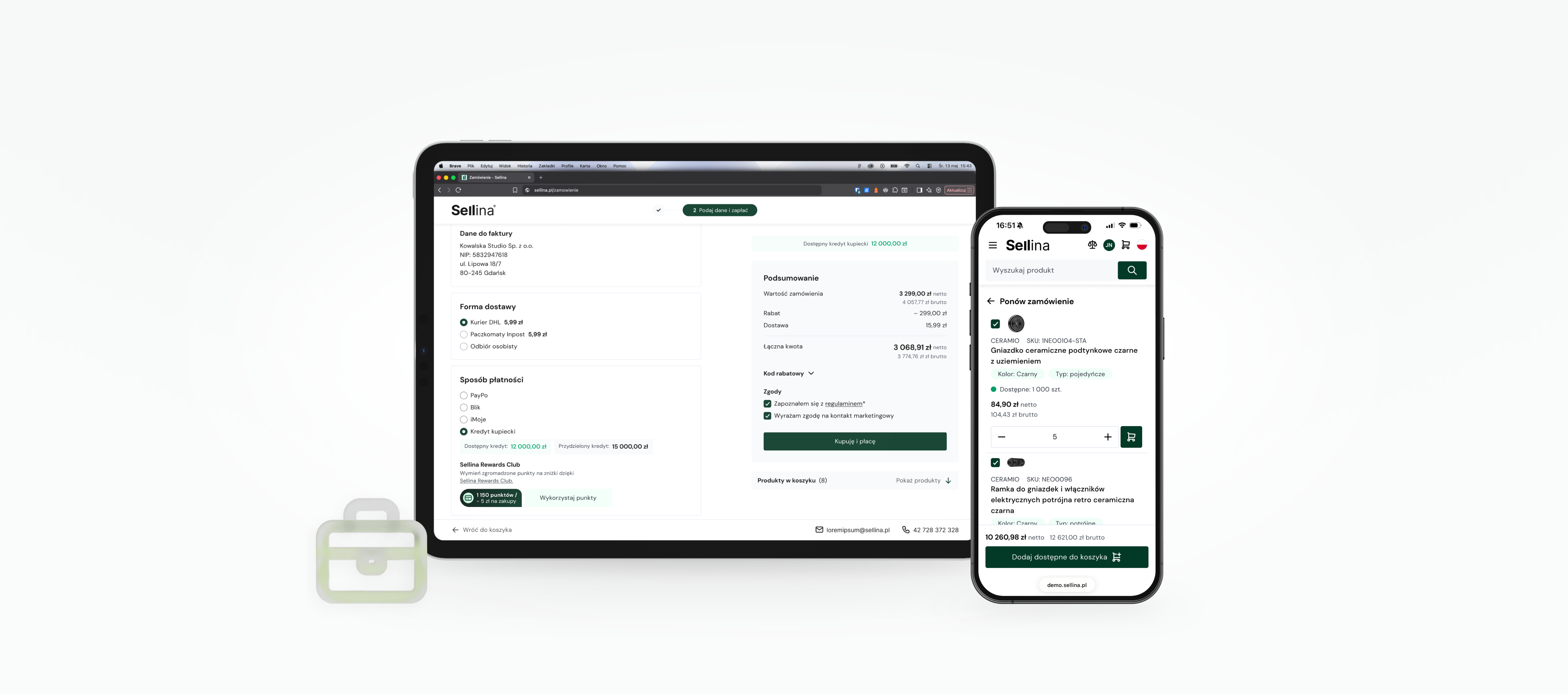
B2B e-commerce is online sales between companies: wholesalers, distributors, and trading partners. Unlike B2C, where purchases are often impulsive and one-off, B2B involves long-term relationships and repeat orders with higher basket values. This translates into different requirements for the platform—it must be aware of each customer's trading terms. This differs from a B2C store in at least three ways: individual price lists and discounts assigned to a specific company, invoice payment with a buyer limit and due date, and integration with an ERP, which provides pricing, inventory, and sales documents.
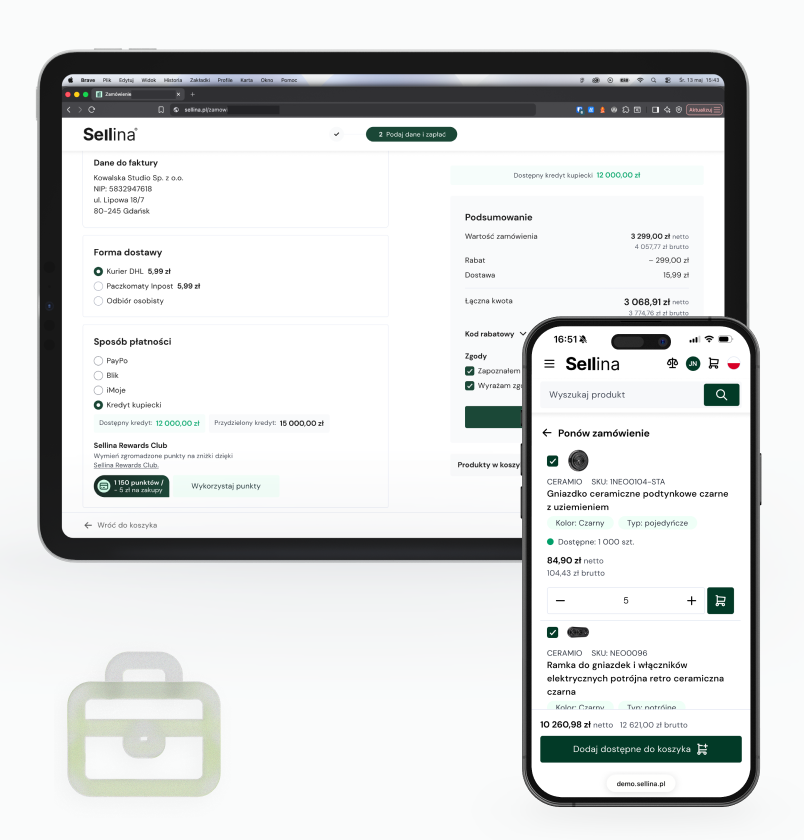
At Cognize, we implement such platforms based on Sellina – a ready-made system based on the Magento 2 engine. Sellina has a ready-made set of B2B functionalities, developed after over 100 implementations, but still leaves complete freedom to add dedicated functionalities.
Our solutions work well in companies that:
01
They are manufacturers or distributors with an extensive network of partners and want to provide them with a 24/7 self-service tool.
02
They have a complex product catalog (thousands or hundreds of thousands of SKUs) and need an effective data management tool, including a PIM system.
03
They apply an individualized pricing policy – they serve different customer groups, grant individual discounts, credit limits and commercial terms.
04
They want to optimize the work of their sales team by giving them a modern tool for placing orders on behalf of the customer and preparing offers.
05
They are planning expansion and need a scalable technological foundation to handle the growing number of orders and customers.
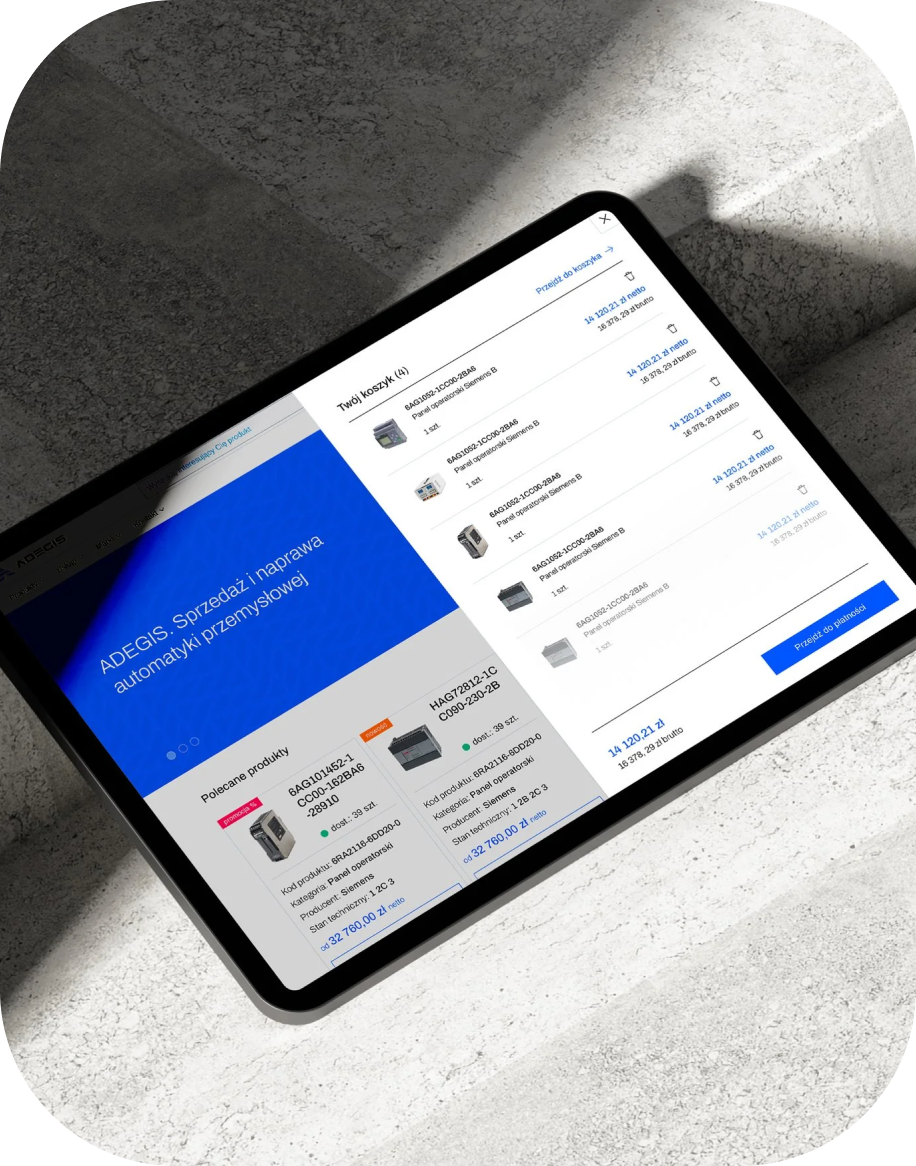
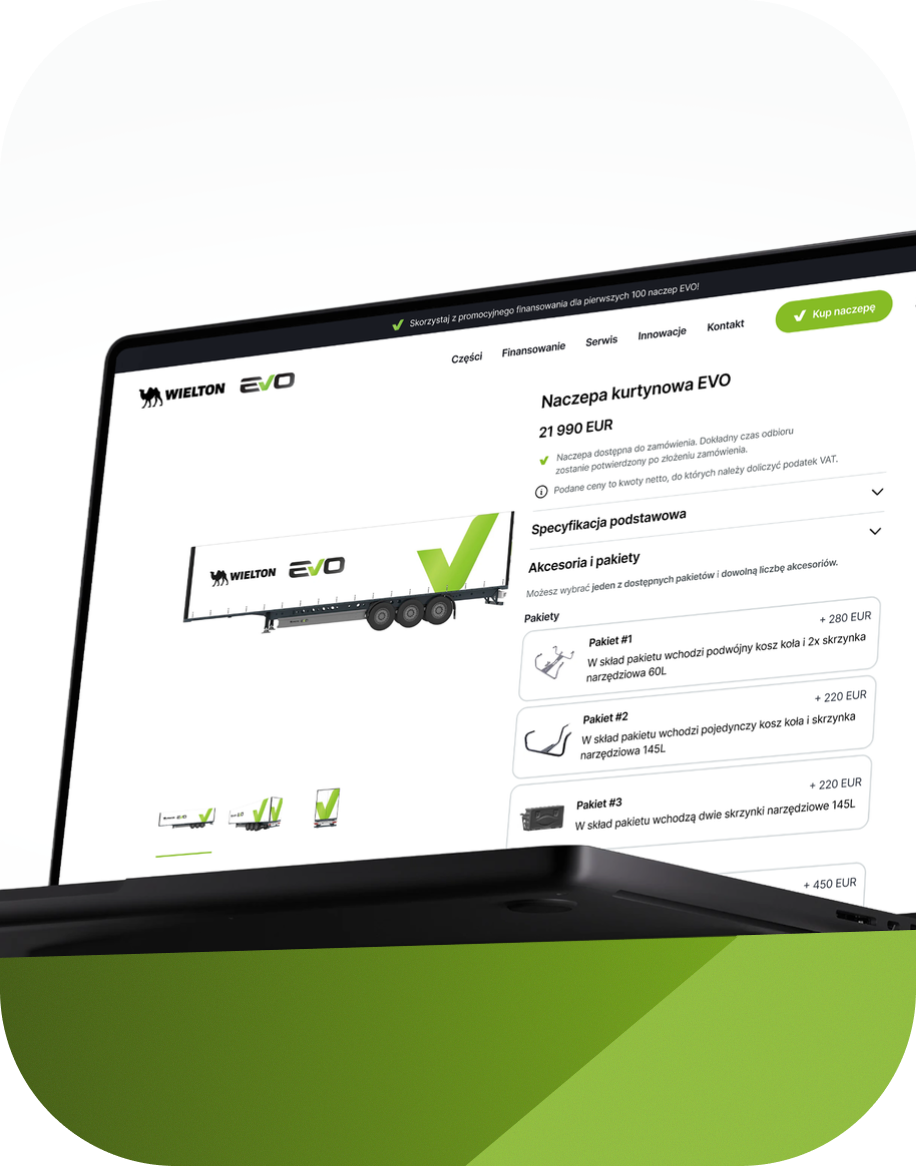
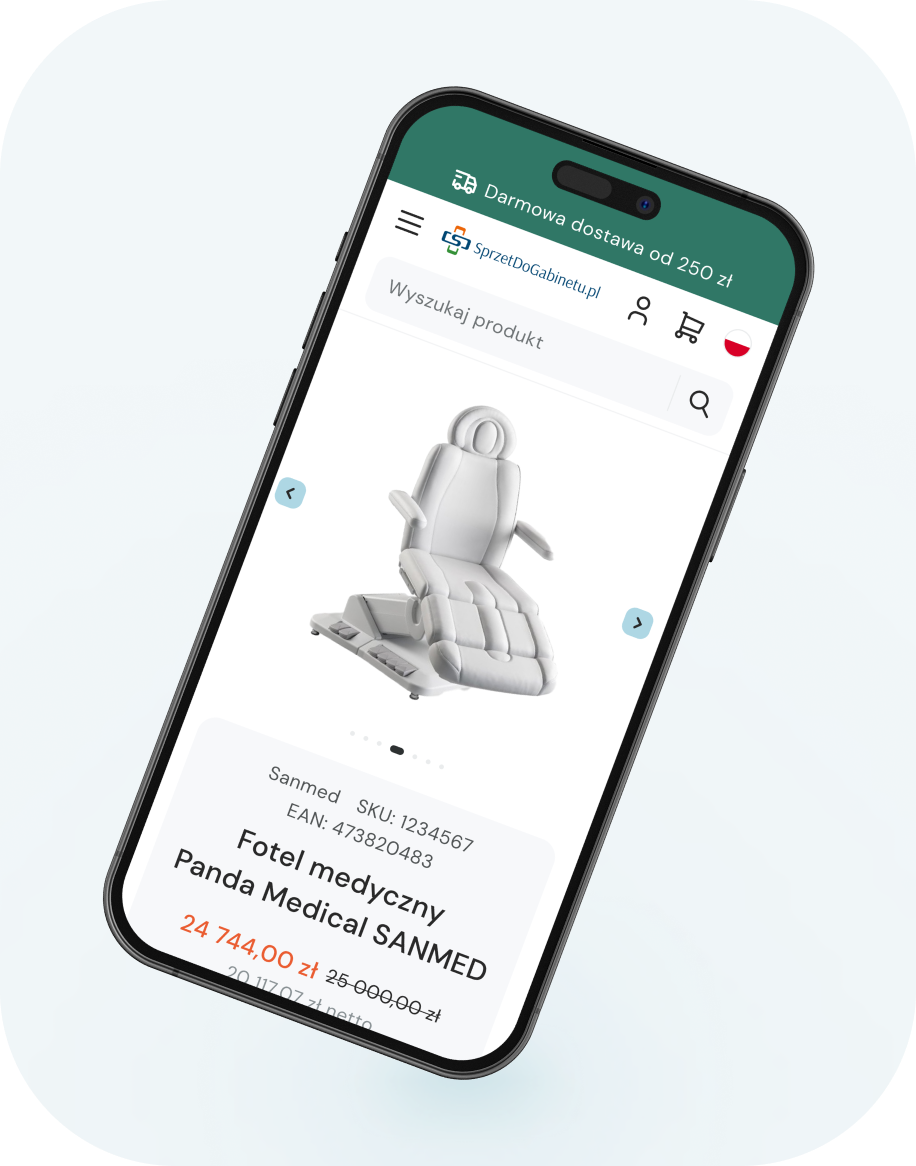
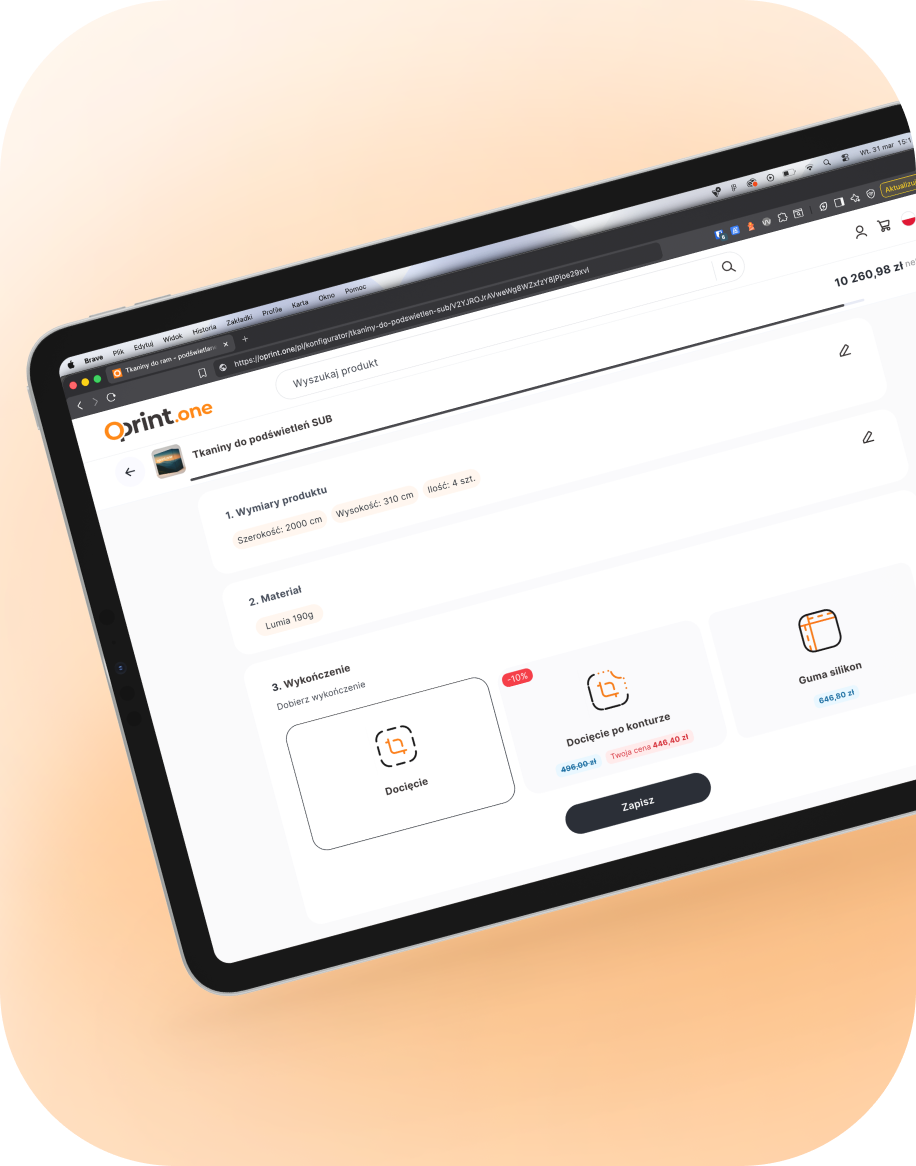
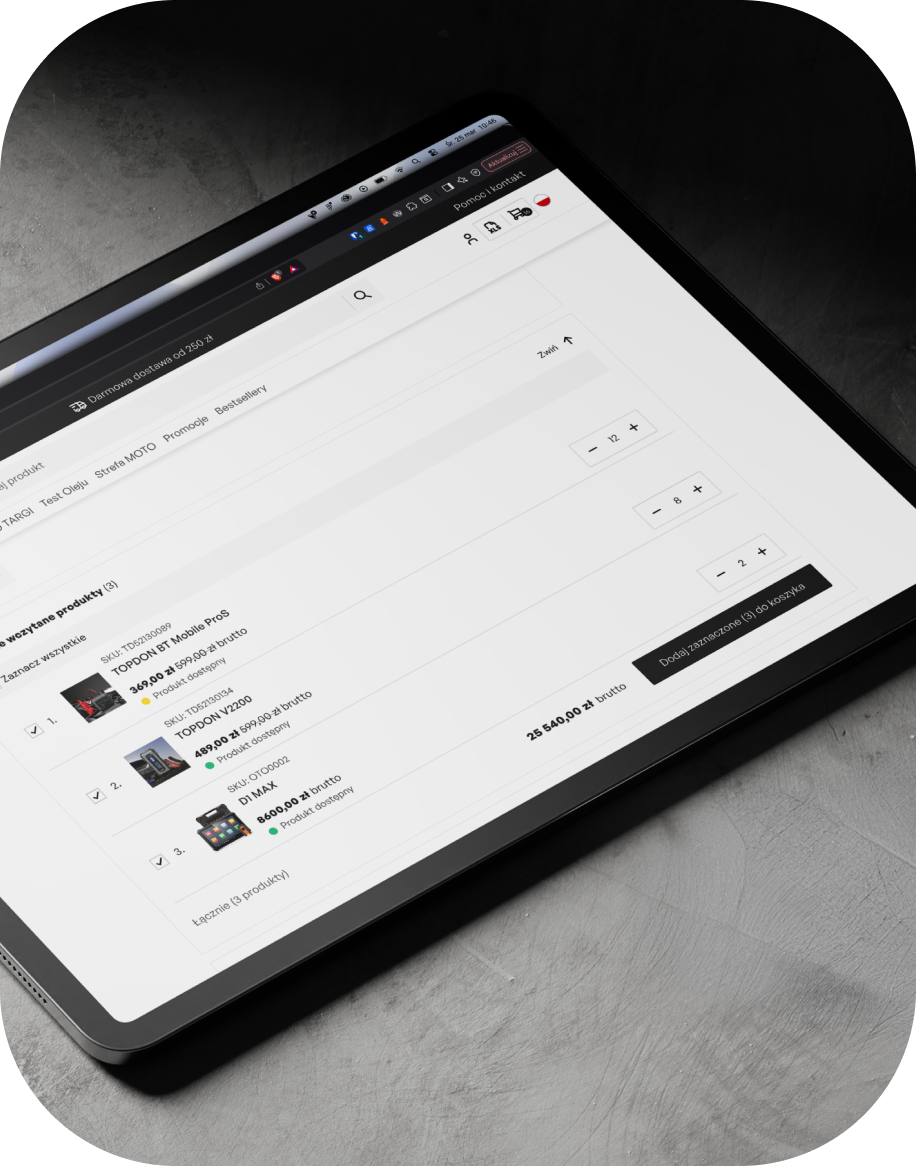
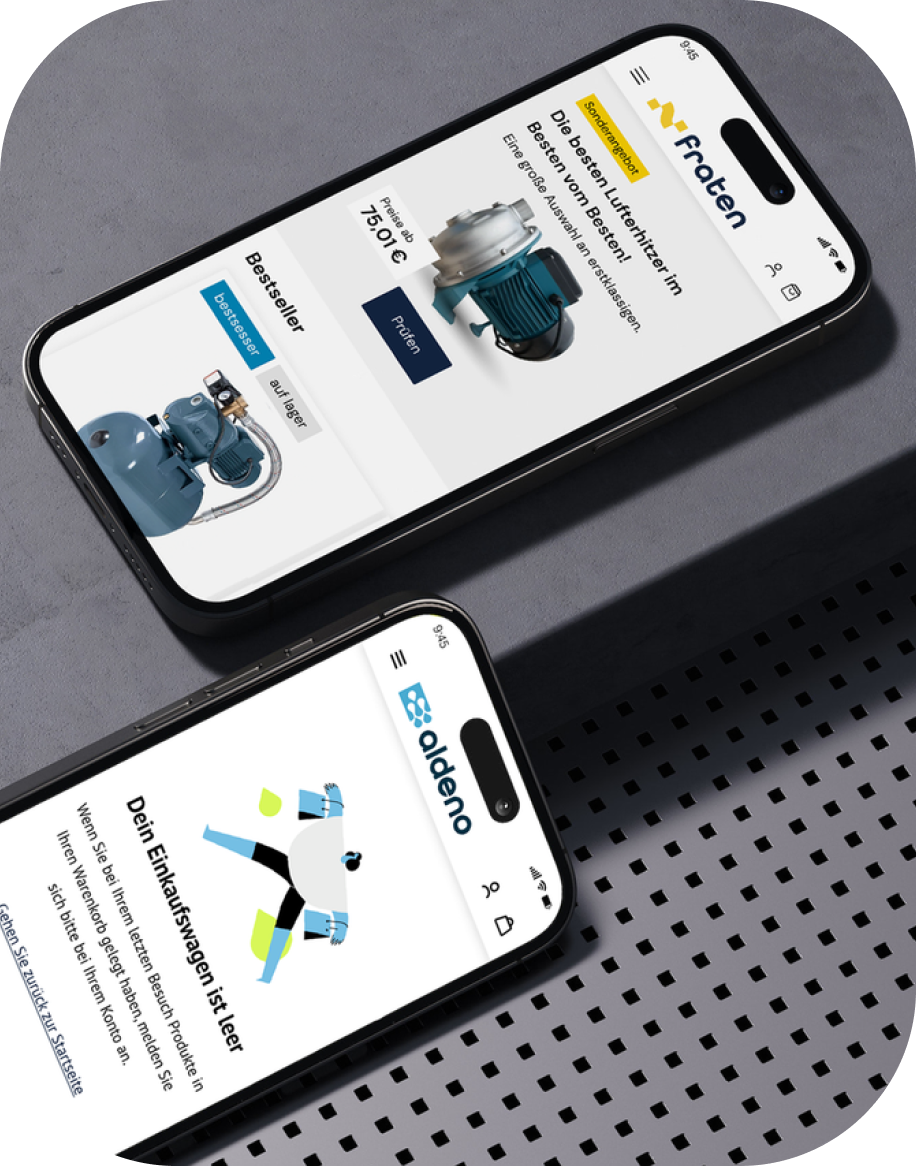
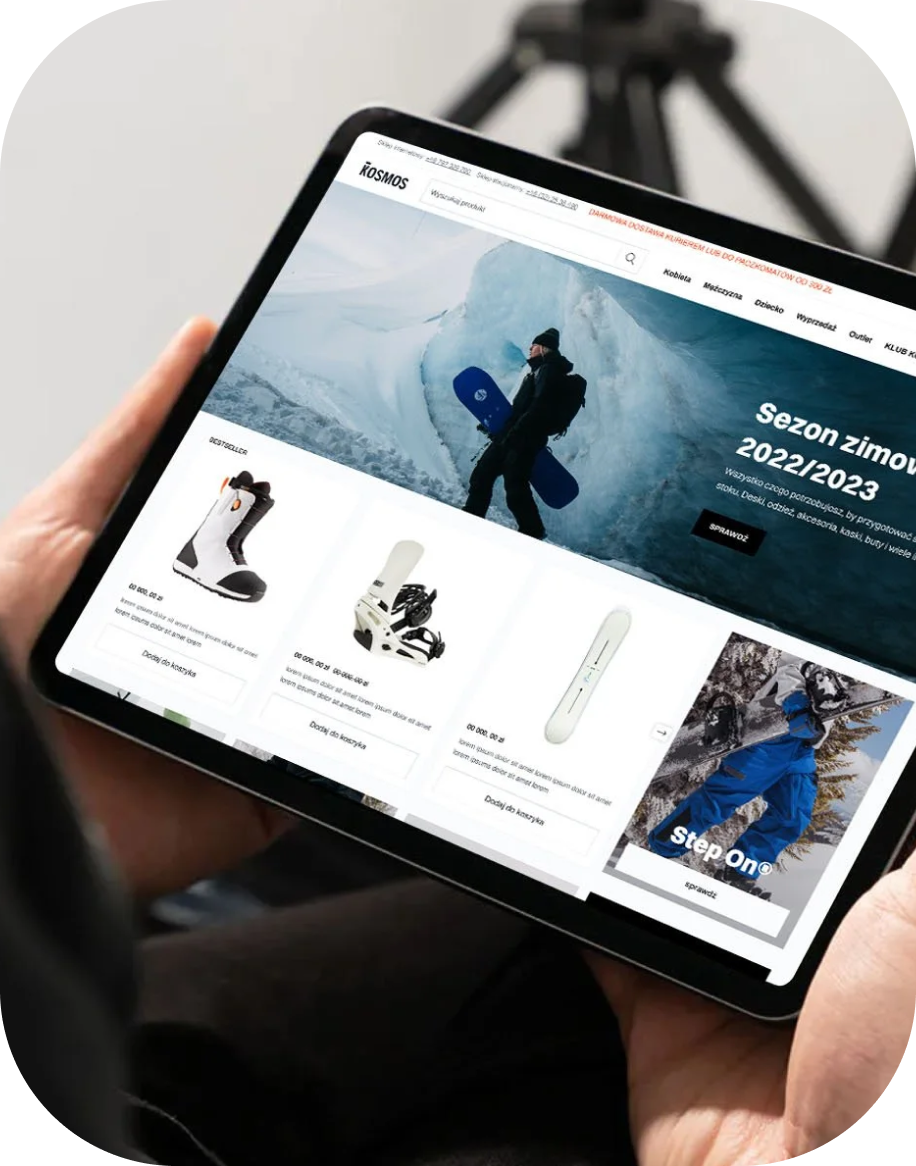
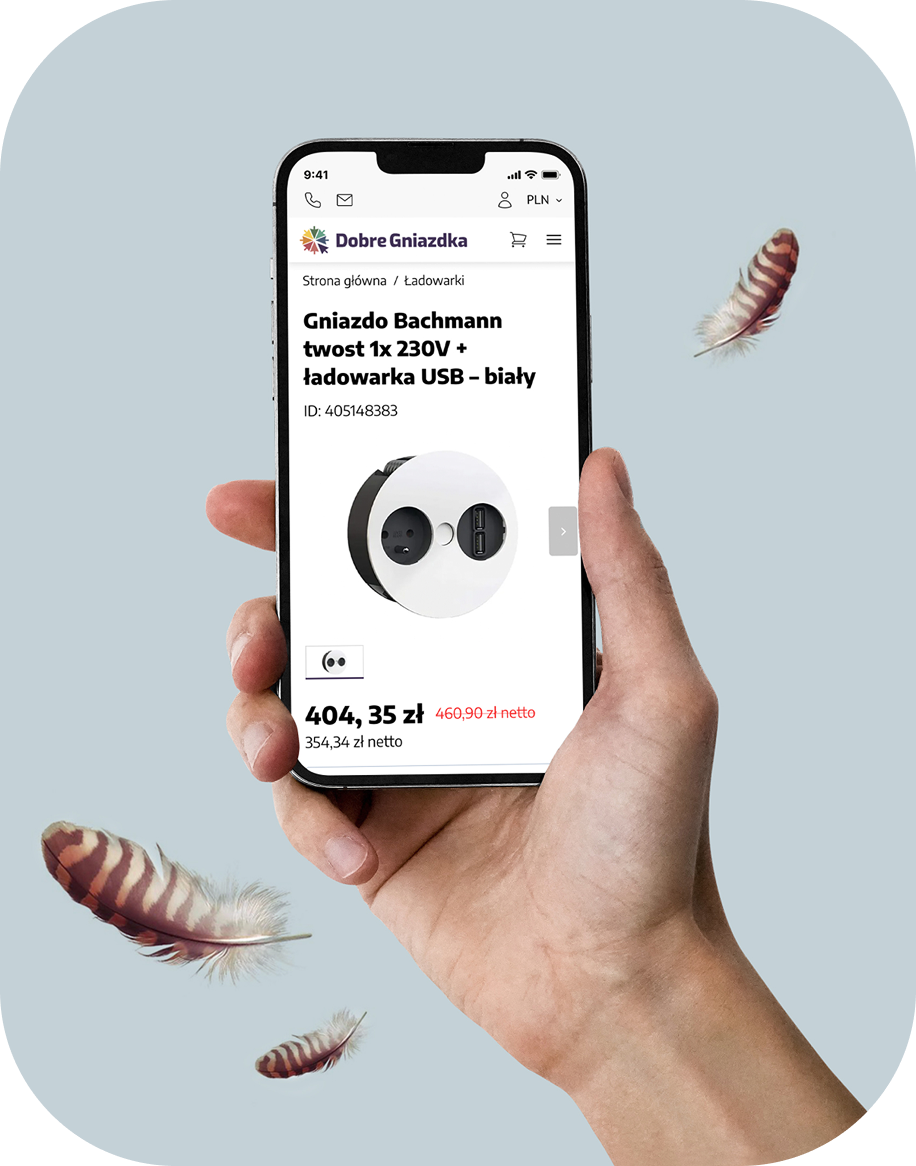
Discover our eCommerce B2B projects
See all case studies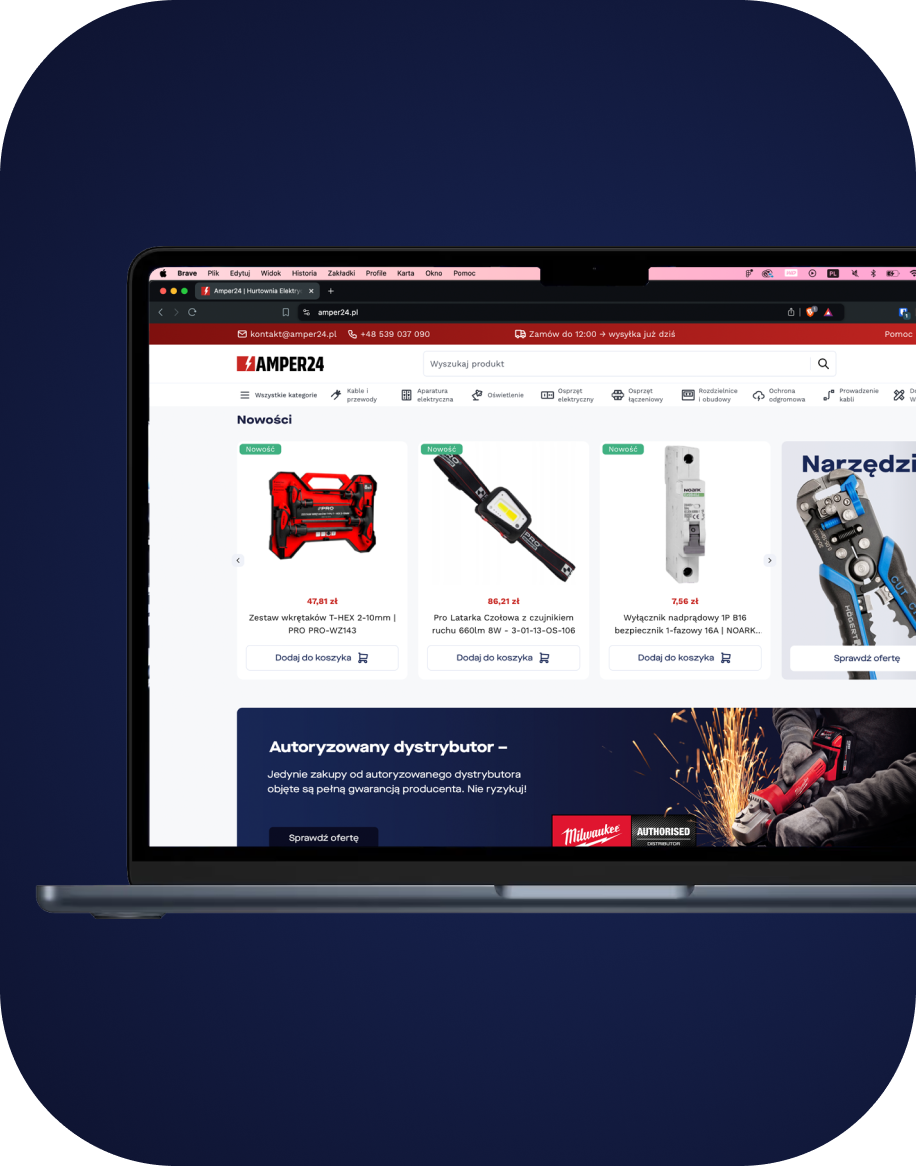
integrations
What ERP system does B2B eCommerce integrate with?
The platform integrates with ERP, downloading customer price lists, inventory levels, buyer limits, and sales documents. We've implemented integrations with Comarch ERP XL, Subiekt GT, and SAP ERP, among others. For larger catalogs, this integration expands to include PIM (Akeneo, Pimcore, Ergonode), from which the system retrieves product data. For multi-channel sales, integration with OMSs such as Baselinker or Apilo, which support marketplaces, is also possible.
eCommerce B2B
Integration with ERP systems
We also integrate stores with applications such as Comarch ERP Optima, Comarch ERP XL, Subiekt GT, Subiekt Nexo, Symfonia, SAP ERP, and Streamsoft Prestiż. This allows us to automate processes related to orders, products, and customer service.
eCommerce B2B
Integration with PIM systems
Gain complete control over product information in your store. By integrating Magento with PIM systems like Akeneo, Pimcore, and Ergonode, you can centralize data management, accelerate catalog updates, and improve customer shopping experiences.
eCommerce B2B
Integration with OMS systems
We integrate our clients' stores with systems such as Baselinker and Apilo, ensuring visibility and automation of sales processes across all marketplaces.


The standard scope of ERP integration includes:
Prices and promotions
Individual customer price lists and discounts downloaded from ERP, with the customer deciding which promotions are active in the online channel.
Stock levels
Availability synchronization, also for virtual warehouses.
Individual
Transferring orders to ERP along with commercial terms.
Product data
Downloaded from the ERP or PIM system if the catalog has tens of thousands of items.
Documents
Invoices and sales documents available to the contractor in the panel.
Merchant limits and payment deadlines
Real-time credit check

Have any questions?
Let's talk about cooperation.
Why Cognize eCommerce B2B agency?
We specialize in digitizing B2B sales for medium-sized and large companies – manufacturers and distributors. Our offering is distinguished by three substantive pillars:

A consultant who cares about the quality of your project
Each project is led by an experienced consultant – a former e-commerce manager from the B2B industry. This ensures that the implementation is led by someone who understands the day-to-day operations, challenges, and needs of your company.
“Flexible Accelerators” that reduce implementation costs and time
When implementing systems, we use ready-made "accelerators." These are systems and modules we've developed ourselves, based on open technologies. They reduce costs and shorten implementation time while remaining fully configurable to your unique needs.
Narrow specialization = we have already completed a project similar to your needs
Over 100 completed projects have allowed us to understand the specifics of companies operating in the B2B (often combined with B2C) sector. As a result, we have reference implementations and customer reviews for 92% of our inquiries.
When is Open Source better than SaaS?
The choice becomes simple with just a few signals.
The company sells to more than one customer group, such as retail partners and individual customers. It is considering implementing B2B and B2C e-commerce in a single system, rather than two separate stores.
It needs integration with any ERP, PIM, OMS or marketplace, without the limitations imposed by a closed system.
I plan to have a catalog of over a million SKUs or a volume of several thousand orders per day.
In a closed SaaS, each of these elements typically represents an additional cost or limited functionality. With Magento 2, system expansion is limitless. Sellina combines this flexibility with a base of ready-made B2B functionality. See a comparison of the open source, SaaS, and Sellina models.
Functionalities available in our B2B eCommerce system
Multi-level price list management
Support for threshold discounts, promotions per customer or group, and individual prices using the pricing application.
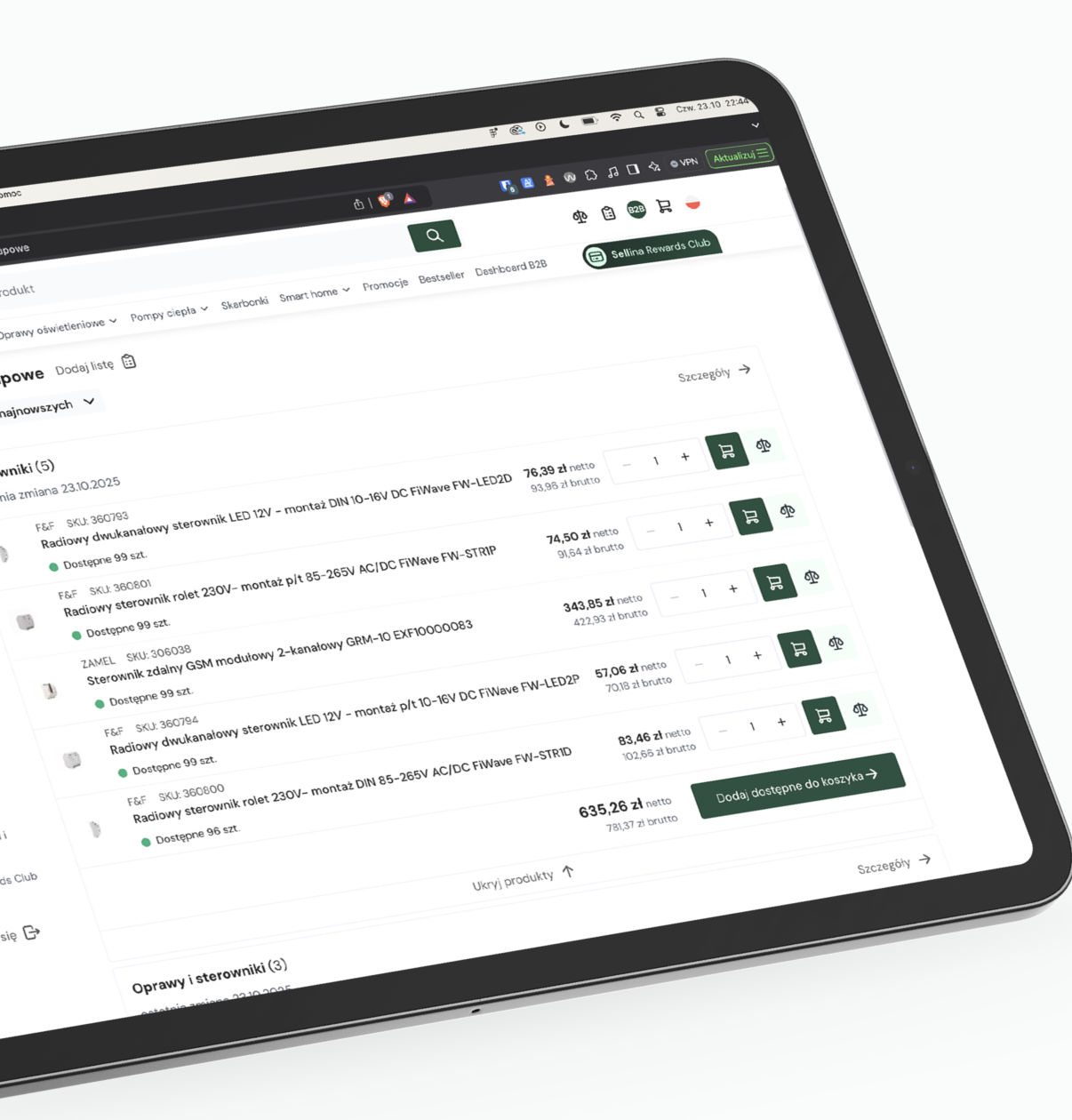
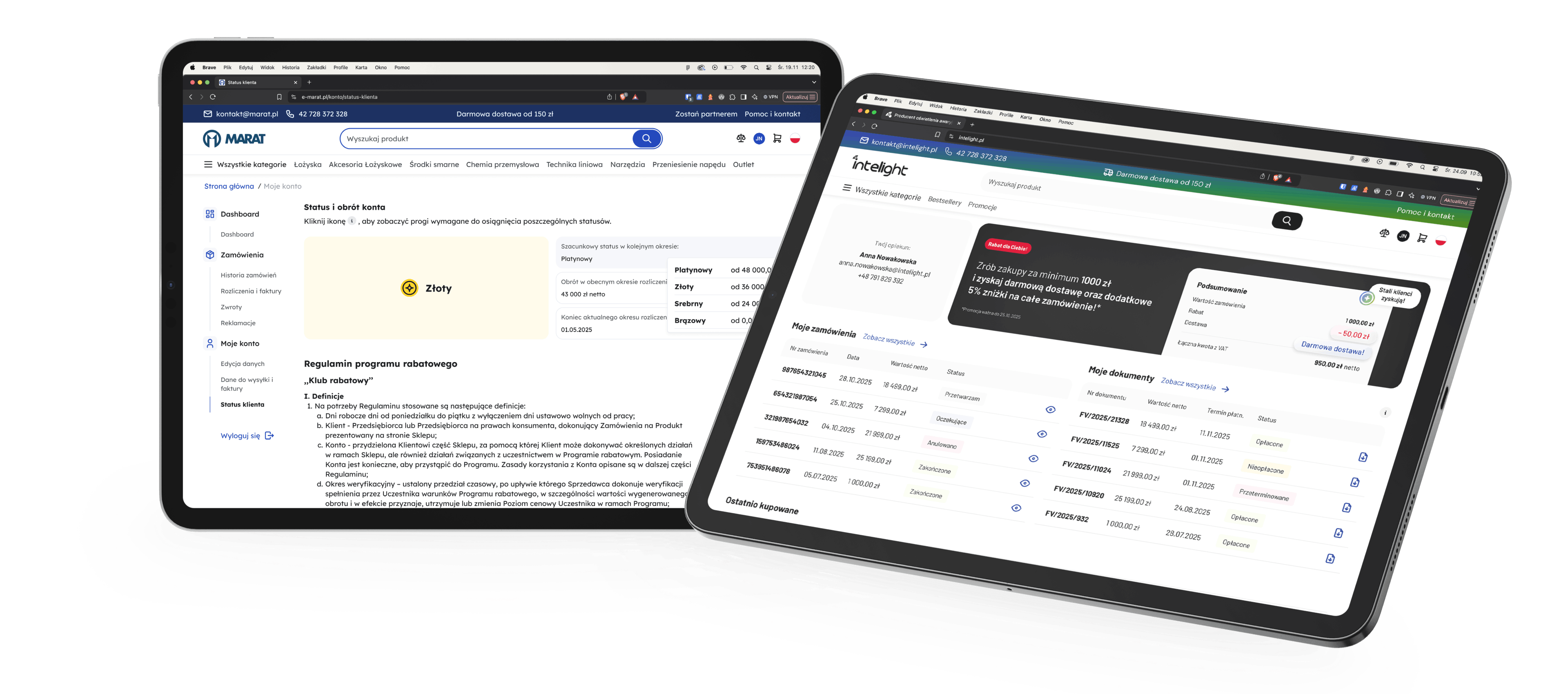
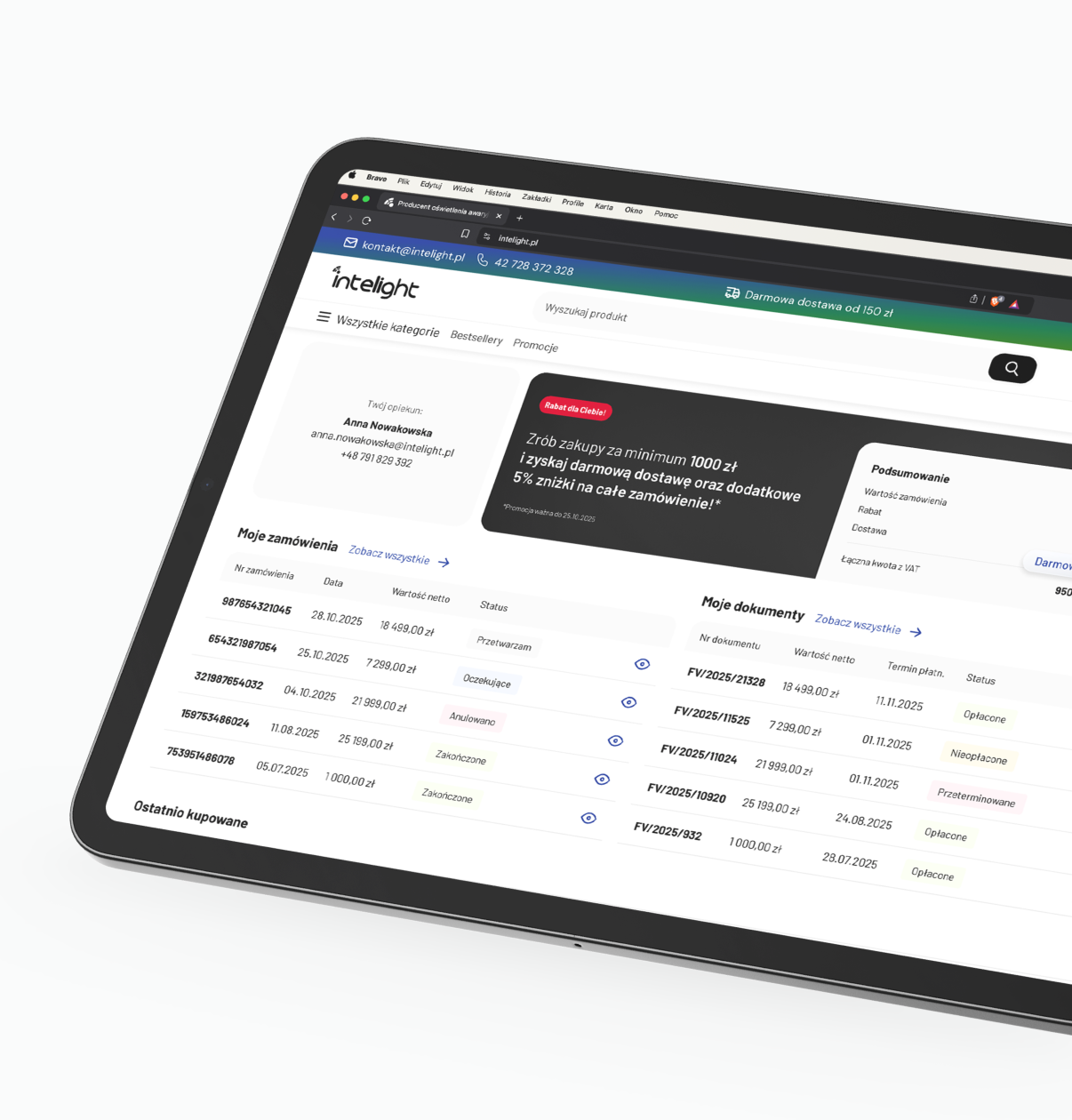
B2B dashboard
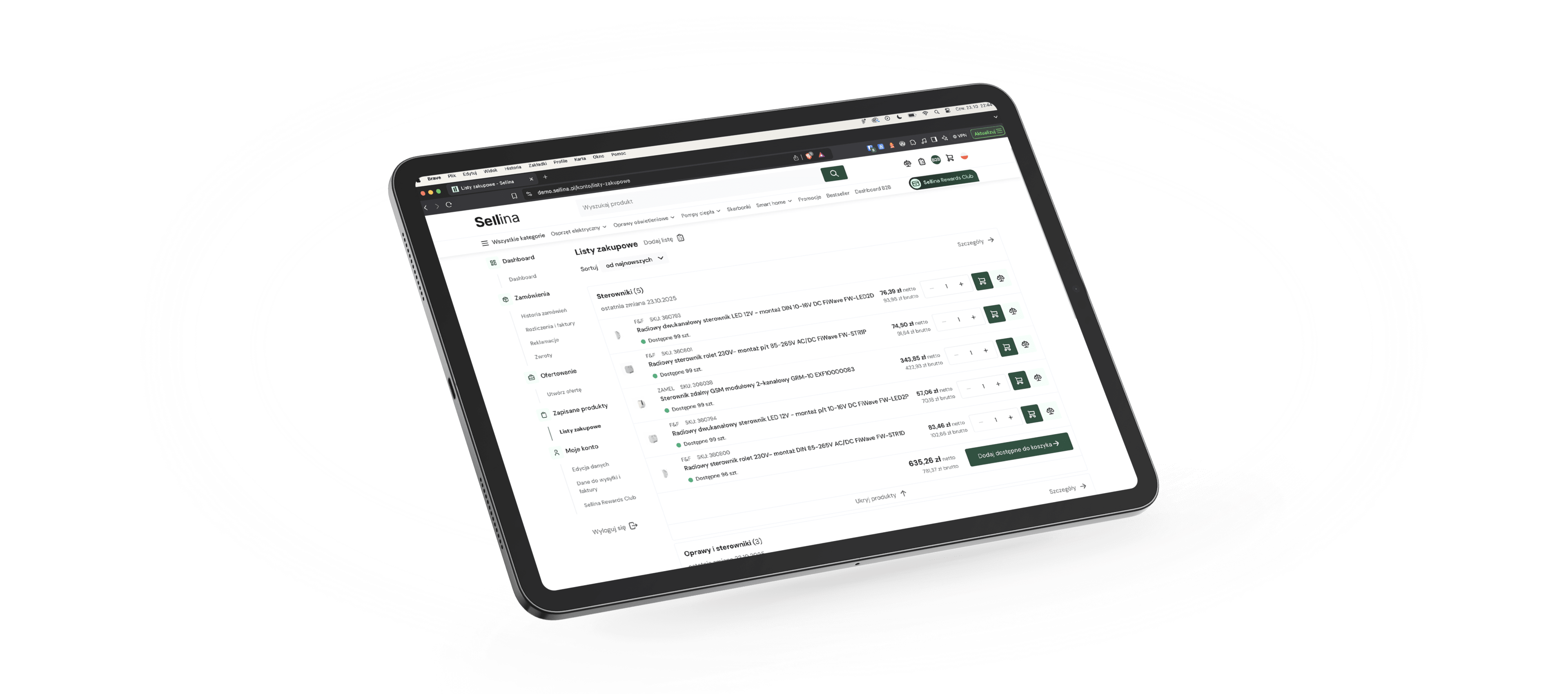
Access to order history, invoices, merchant limits and reorders.
Offer module
Ability to log in as a customer to fill the cart/make a purchase for the customer.
Efficient search engine
Advanced filtering on search results and the ability to embed an external AI search engine, e.g. Luigi's Box.
Support for B2B payment methods
The customer basket includes typical business payment methods, including trade credit with a limit, deferred terms and integration with leasing systems.
Handling commercial documents
We provide clients with a dashboard with 24/7 access to all commercial documents, such as invoices, corrections and order history.
Quick orders
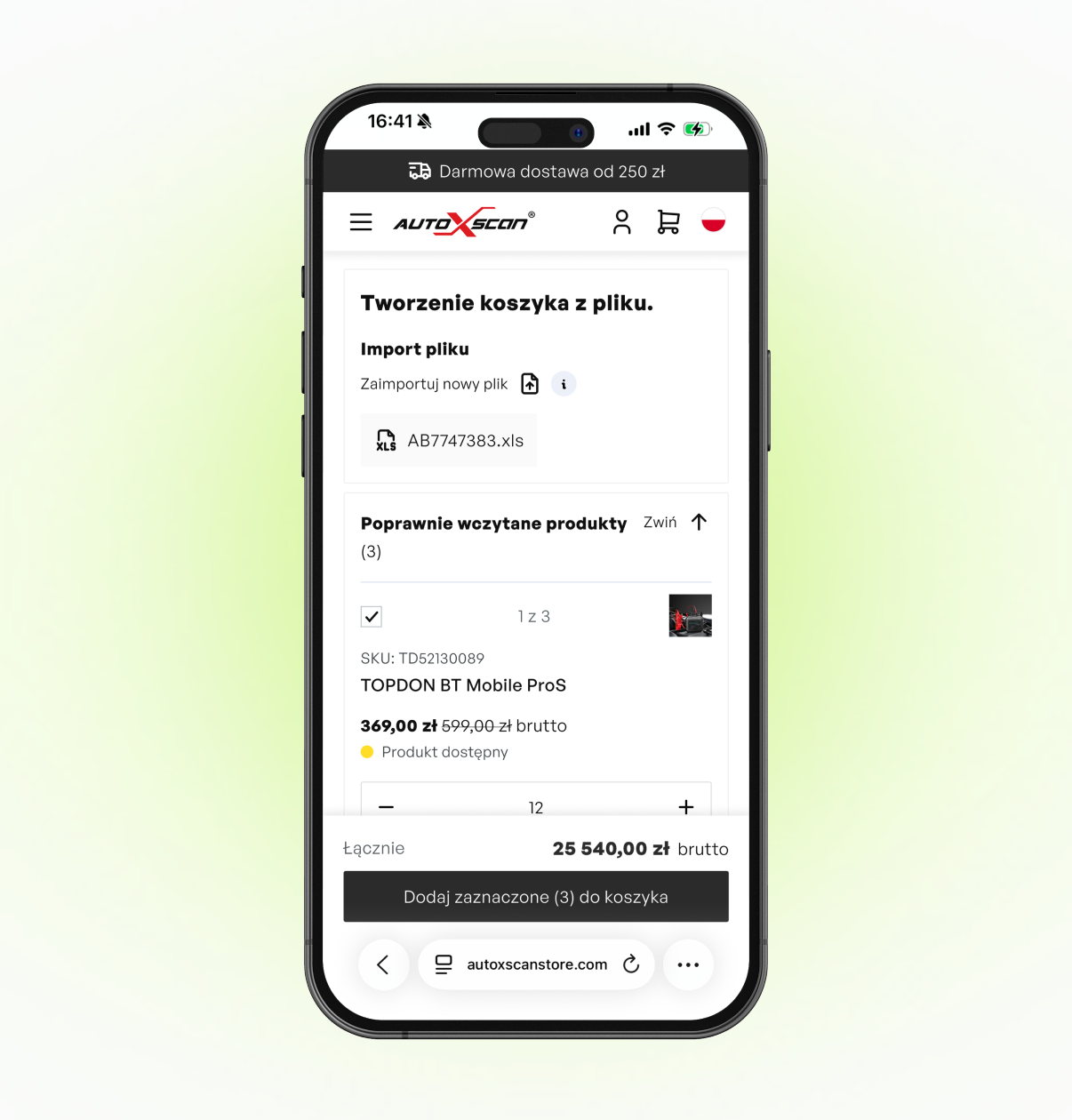
Reordering and merging carts after logging in (customers don't lose their carts placed while logged out). Import carts from CSV/XLS files.
B2B product card
Displays net/gross prices, quantity thresholds, individual discounts, and real-time inventory levels. Add products to comparison or shopping lists.
Full integration with ERP, PIM, OMS
Bidirectional synchronization of product, inventory, customer and order data.
B2B customer acceptance path upon registration
We provide a controlled registration process, where each new business account requires verification and setting of commercial terms.
Module for managing the assignment of salespeople to contractors
The platform allows you to assign a dedicated sales representative to a customer, giving them insight into their history and the ability to place orders on their behalf.
Permission structures in the administration panel
Internal user management and a complex permission system.
Managing multiple users within one contractor
The system allows you to create multiple accounts with different permissions within a single company, reflecting its internal structure and approval hierarchy.
Have any questions?
Want to see the full list of features?
Inquiries
How does the request for quotation work?
We take responsibility for our clients' businesses.
Our approach and effective actions build partnerships that we mutually appreciate.
01
Contact and talk about the project
Contact us and explain your needs. We'll gather all your requirements and discuss your project together (in person or via video call).
02
Specification and planning
We'll work with you to develop project specifications during a workshop at your company. At the end of the meeting, we'll create documentation, a feature list, and a full project plan.
03
Offer and implementation
We will respond to your specifications and present our offer. We will begin the project with a kick-off meeting, during which we will introduce the experts from our dedicated team and present the work schedule.
Scoping process
and project budget (free of charge)

Pre-implementation analysis process
(about 4 weeks)

What else can we do for your company?
Cognize B2B eCommerce Agency - What do we do?
We offer services aimed at increasing revenue, optimizing processes and improving profitability.
Investment
Implementation and maintenance
integrations
Technology
B2B consulting
Not sure what system you need yet?
Before you decide on a specific technology, it's worth exploring which solution truly fits your sales model. Our experienced B2B eCommerce Manager consultants help companies choose the right direction—without predetermined answers. If you feel it's a good time for a consultation, learn what such a collaboration looks like.

Experience
Experience in your industry
The electrical, heating, lighting, cosmetics, medical, motorcycle, automotive, FMCG, clothing, and sports industries are just some of the industries we have implemented. Ask about our experience in your industry.













What do our clients say about us?
Punctuality, flexibility, availability, professionalism (...)
In 2017, we began working with Cognize (KMK Group) on the BAST system. Since then, the project has been developed and managed with exemplary skill. Cognize's (KMK Group) work is characterized by timeliness, flexibility, availability, professionalism, and, most importantly, the ability to present complex programming solutions in an accessible format.

This cooperation has resulted in our development and stability.
This cooperation has resulted in our development and stability, and the form of business contacts based on mutual trust is increasingly rare today, yet extremely effective.

(…) we can now easily and effectively manage our product catalog (…)
Cognize provided us with two services: Digital Sales Transformation Consulting and PIM Implementation. They provided the necessary know-how and demonstrated methods for various business process integrations with PIM systems. Thanks to their expertise, we can now easily and effectively manage our product catalog while minimizing implementation costs.

They helped us understand our needs and proposed the best solution based on the analysis results.
Our collaboration with Cognize began with a consultation. At this stage, they helped us understand our needs and proposed the best solution based on the analysis results. Cognize then began implementing the final system. The project was conducted with a high level of communication, on time, and, most importantly, with the Cognize team's ongoing initiative.

Immediately after opening the new store, we saw an immediate increase in sales.
After launching the new online store, sales immediately increased. The Cognize team (formerly KMK Group) was able to manage the project independently, working with minimal involvement from the snowboard brand. Their independence and communication skills were also impressive.

(...) we recorded a dynamic increase in our company's turnover
(...) The e-commerce platform they created not only meets all our expectations but also provides enormous opportunities for future technological development. Thanks to the solid technical architecture and innovative features, we have seen dynamic growth in our company's turnover, which we attribute directly to the functionality of the new website. Excellent communication and high availability of the team ensured we could count on support at every stage of the project. (...)

FAQ