Client: Opinion (Oprint.one)
Case study
Advanced online product configurator for printing houses – Oprint.one, a B2B platform based on Magento

Why did Opinion decide to digitalize its sales process?
In 2023, Opinion decided to digitize its sales process to meet the needs of B2B customers and automate the configuration process of complex products performed directly by customers. Thanks to the strong commitment of the investor's team, the project took the form of a consulting and technological collaboration and resulted in the creation of a modern B2B platform – Oprint.one.
What were the main goals of the Oprint.one project?
The project was designed with business clients in mind, taking into account the specifics of printing orders and their configuration. Key goals included:

Conducting an analysis of IT resources and business processes
A thorough verification of the existing IT infrastructure and business processes allowed for proper planning and definition of individual stages of implementation work.
Implementation of your own B2B platform based on Magento with an advanced product configurator
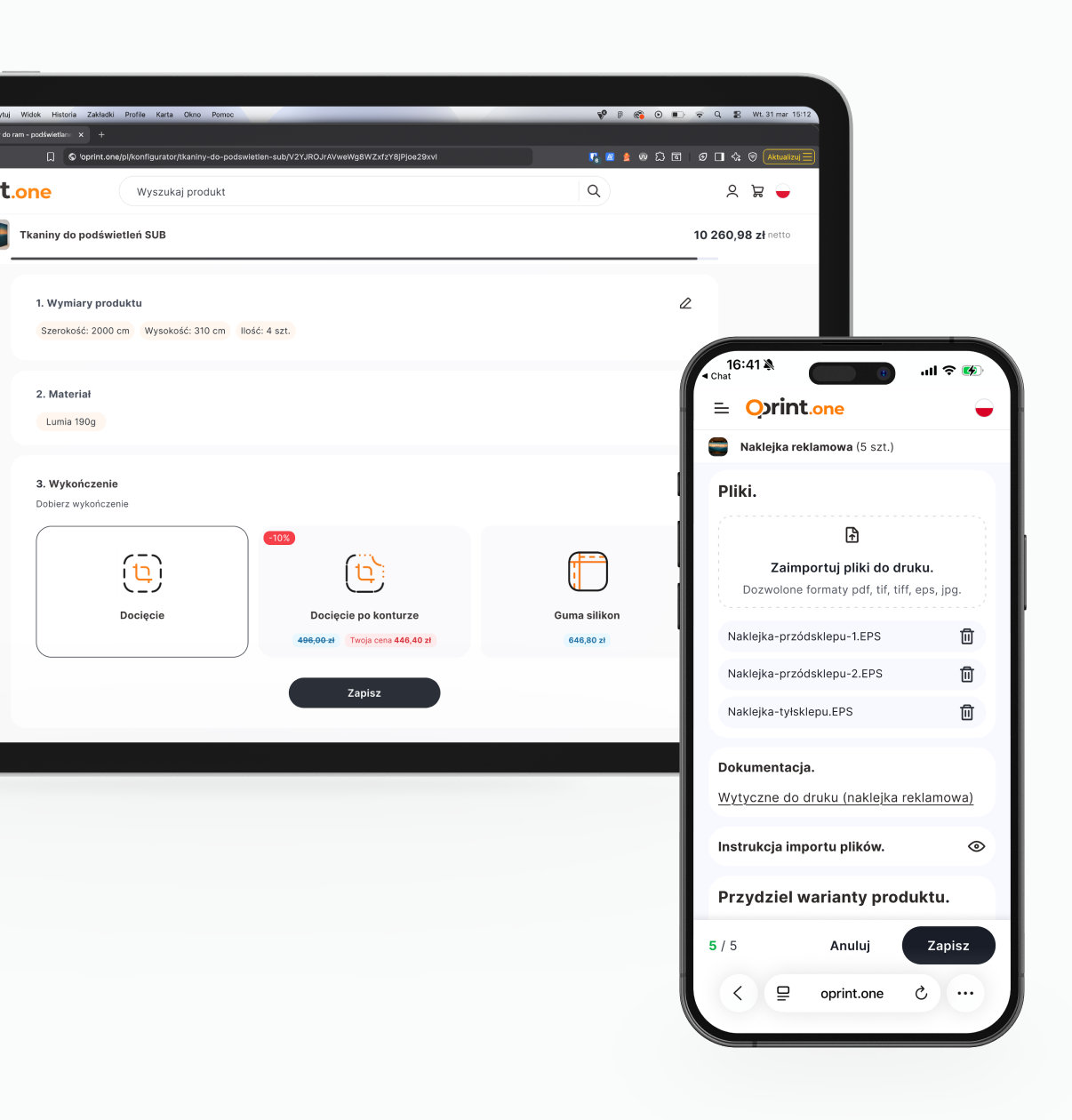
To this end, we've created a comprehensive sales environment with an advanced product configurator. It allows you to create custom orders based on variable parameters, as well as many additional features, which we'll discuss later.
Integration with the Microsoft Dynamics 365 ERP system
The intermediary database enabled efficient data synchronization, and as part of the integration, the database was expanded with additional parameters, including individual customer conditions and credit limits.
What were the stages of project implementation?
The implementation of the Oprint.one platform was divided into several key stages:
01
Pre-implementation analysis
Verification of business needs, analysis of processes and setting priorities.
02
Sellina Implementation
Launching an eCommerce B2B/B2C system on the Magento engine.
03
Configurator implementation
Building a tool enabling independent creation of orders.
04
Functional development
shop
Implementation of key functions for B2B clients.
05
Transferring B2B customers to the online channel
Introduction of a pilot group of 8 clients to the platform (stage still ongoing).

Have any questions?
Let's talk about cooperation.
What key functionalities have been implemented in Sellin – a system based on the Magento engine?
As part of the project, a wide range of functionalities supporting B2B sales were implemented.
List of configurations with the possibility of redoing them
Users can return to previously saved configurations and easily modify or redo them, speeding up the process of placing repeat orders.
Possibility to save configuration in the "Configuration List"
Saved product settings are available in the customer panel, allowing you to organize and use them in the future.
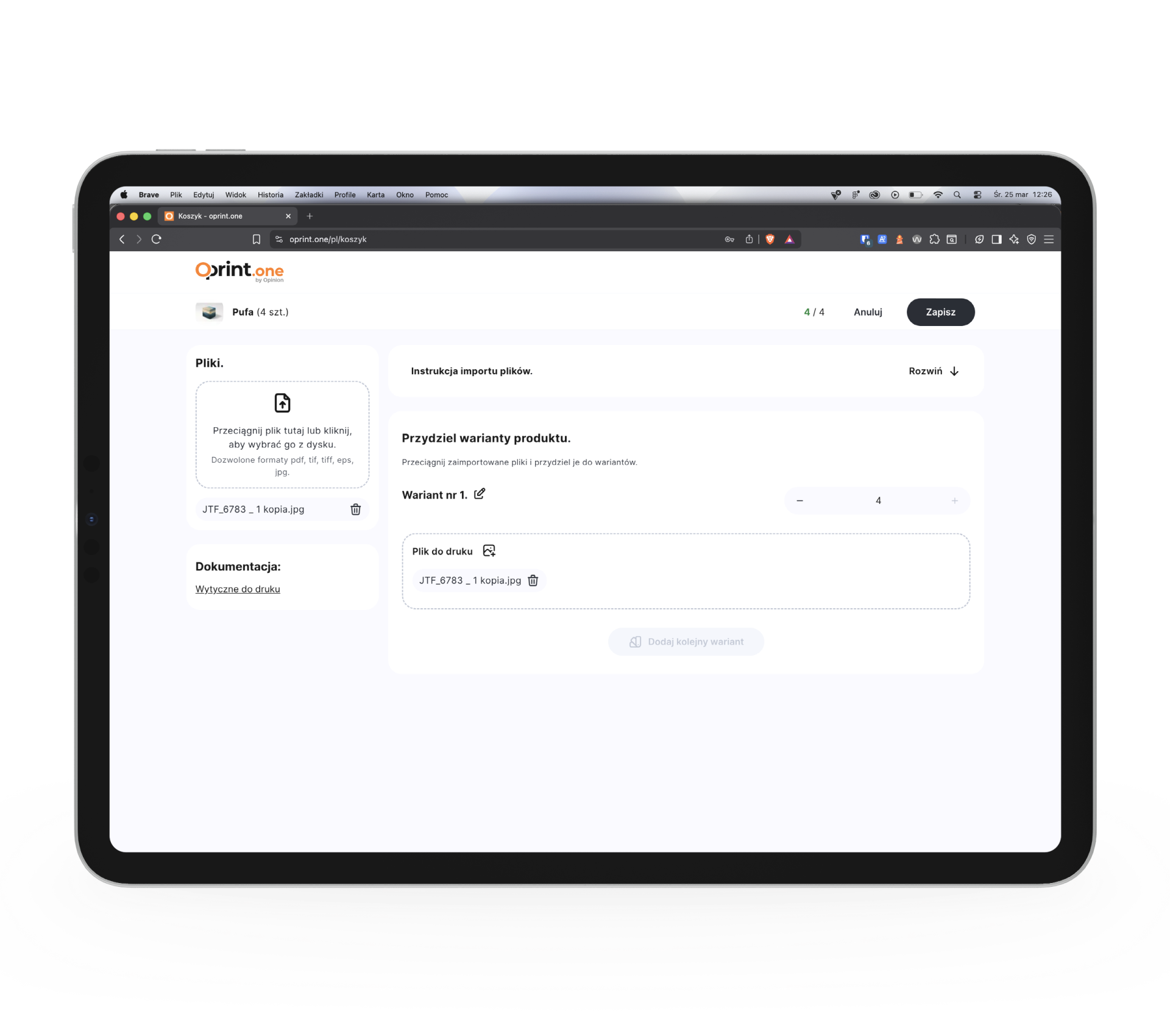
Possibility to upload files to the order
Customers can attach graphic files directly when placing an order, which streamlines communication with the printing house.
Advanced price calculation mechanisms
The system dynamically calculates the product cost based on production variables, including material losses (waste counting), which ensures price transparency.
Prices are visible only after the customer logs in
This allows you to present your product offer to a wide audience without disclosing individual commercial terms.
International payment processing
Integration with the Stripe payment gateway, enabling secure handling of foreign transactions in multiple currencies.
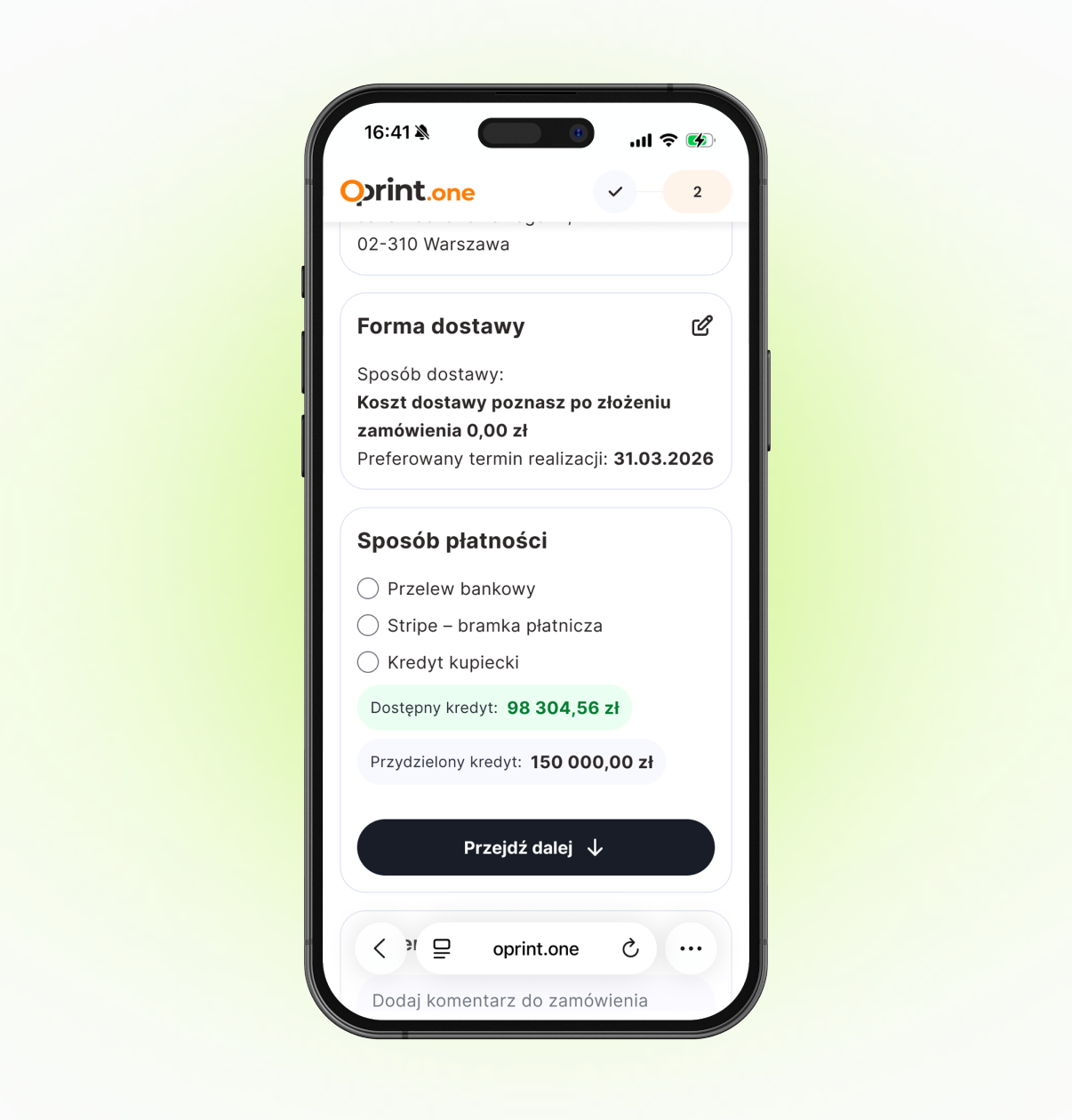
Payment processing with a credit limit
Customers are assigned individual purchasing limits, reflecting the agreed trading terms.
Extensive presentation of commercial documents
The user has access to invoices, orders and transaction history in one place.
Taking into account your preferred delivery date
The customer can indicate the desired completion date, which supports production and logistics planning.
Handling the customer account activation process
The process of registering and approving new accounts allows you to control access to the full range of services.
Integration with the courier company's API
Automation of logistics processes includes, among other things, the ability for customers to track their shipments. Furthermore, as part of the integration, the system retrieves data on package dimensions for a given configuration from the ERP and transmits it to the courier company's system, streamlining pricing and the shipping process.
Multiple language and currency support
Functionality essential in the context of international operations – customers see content and prices tailored to the local context thanks to 5 language versions, support for 2 currencies with individual price lists and validation of VAT numbers in the VIES system.

What is the importance of the product configurator on the Oprint.one platform?
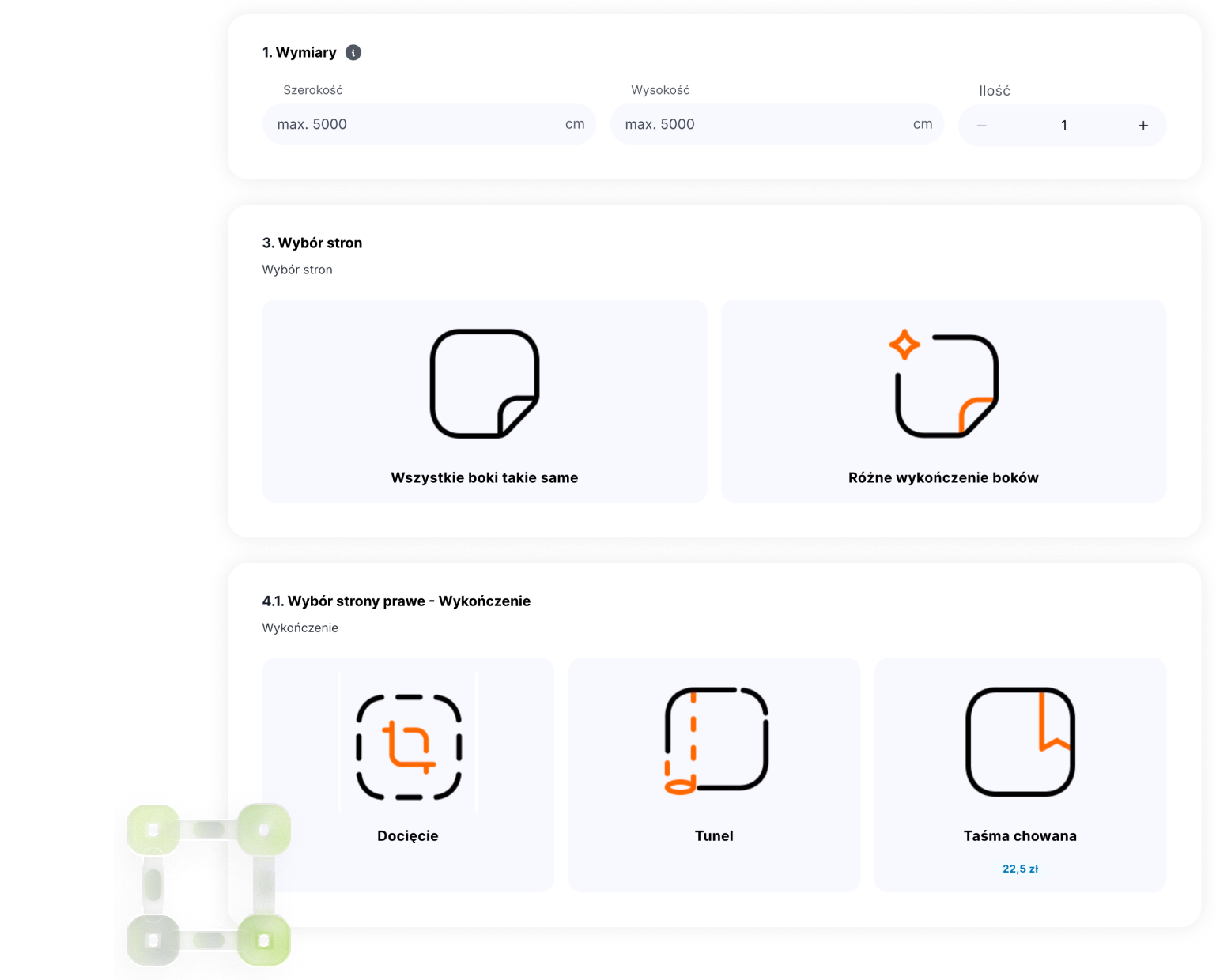
The configurator is a key element of the platform and its greatest asset, as it automates many previously manual processes. Its implementation enables B2B clients to:
• performing multi-stage product configuration, taking into account the dependencies between steps, where the selection of one option affects the availability of subsequent ones,
• configuring individual sides of the product – both individually and in stages (e.g. one side, two, three, etc.), depending on the needs,
• precise definition of product parameters (format, paper, finishing, circulation, etc.),
• dynamic price recalculation taking into account waste and discounts,
• saving configurations for reuse,
• sending a ready configuration for verification or immediate implementation.
How is the platform integrated with the Microsoft Dynamics 365 ERP system?
The platform was integrated with Microsoft Dynamics 365 ERP using an intermediary database . This enabled:
Synchronization of customer data, orders and inventory levels.
Providing individual terms and conditions (e.g. prices, credit limits, currencies).
Optimizing the performance and security of data flow.
Have any questions?
Let's talk about cooperation.
What are the effects of implementing the Oprint.one platform?
Although the project is still in the pilot phase, the first results can already be seen.
01
B2B order processing has been automated.
02
The bidding and calculation process has been optimized.
03
Expanded operations into foreign markets thanks to multilingualism and multicurrency.
04
A hybrid sales model has been introduced: an open catalog with the option of configuration and placing an order after logging in.
Discover our selected projects
See all case studies


Do you have an idea, a ready specification or a business need?
Write to us. We will contact you within 24 hours.