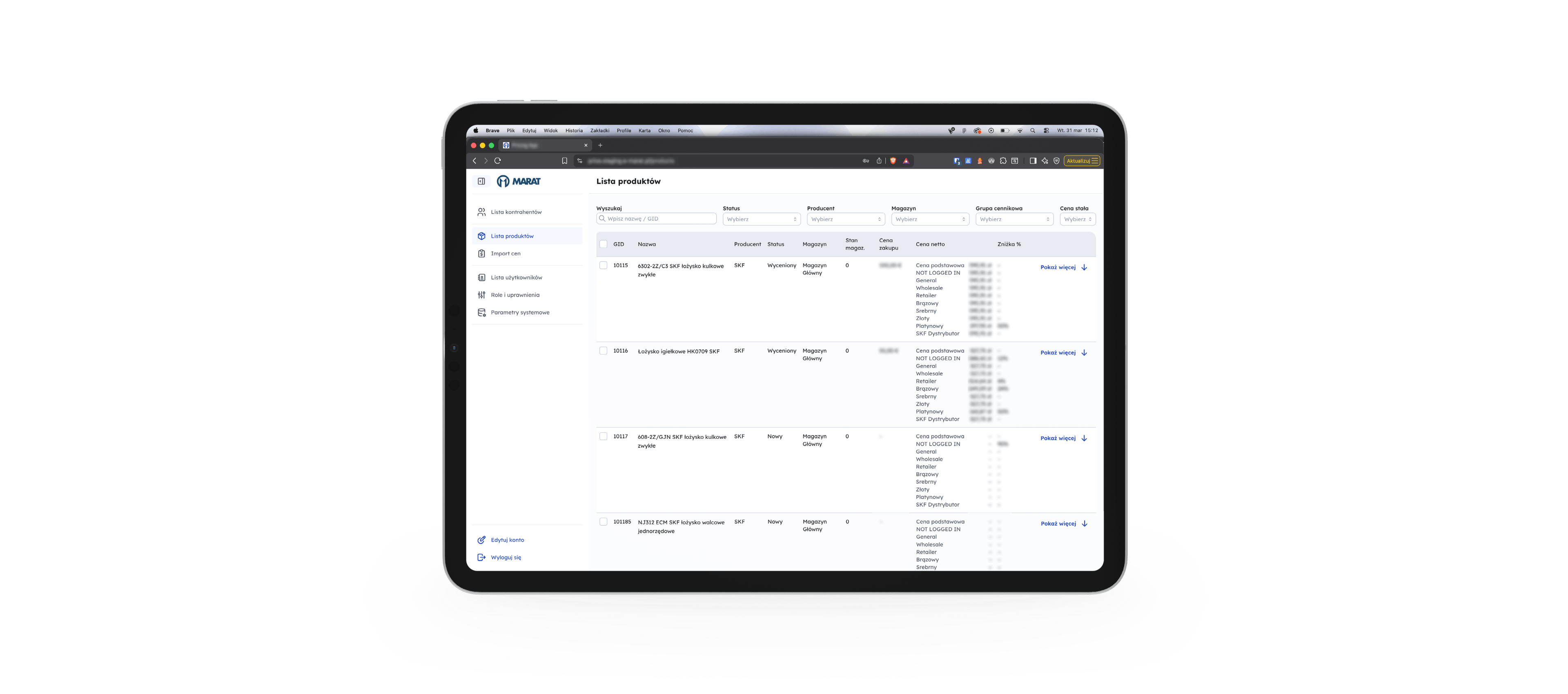
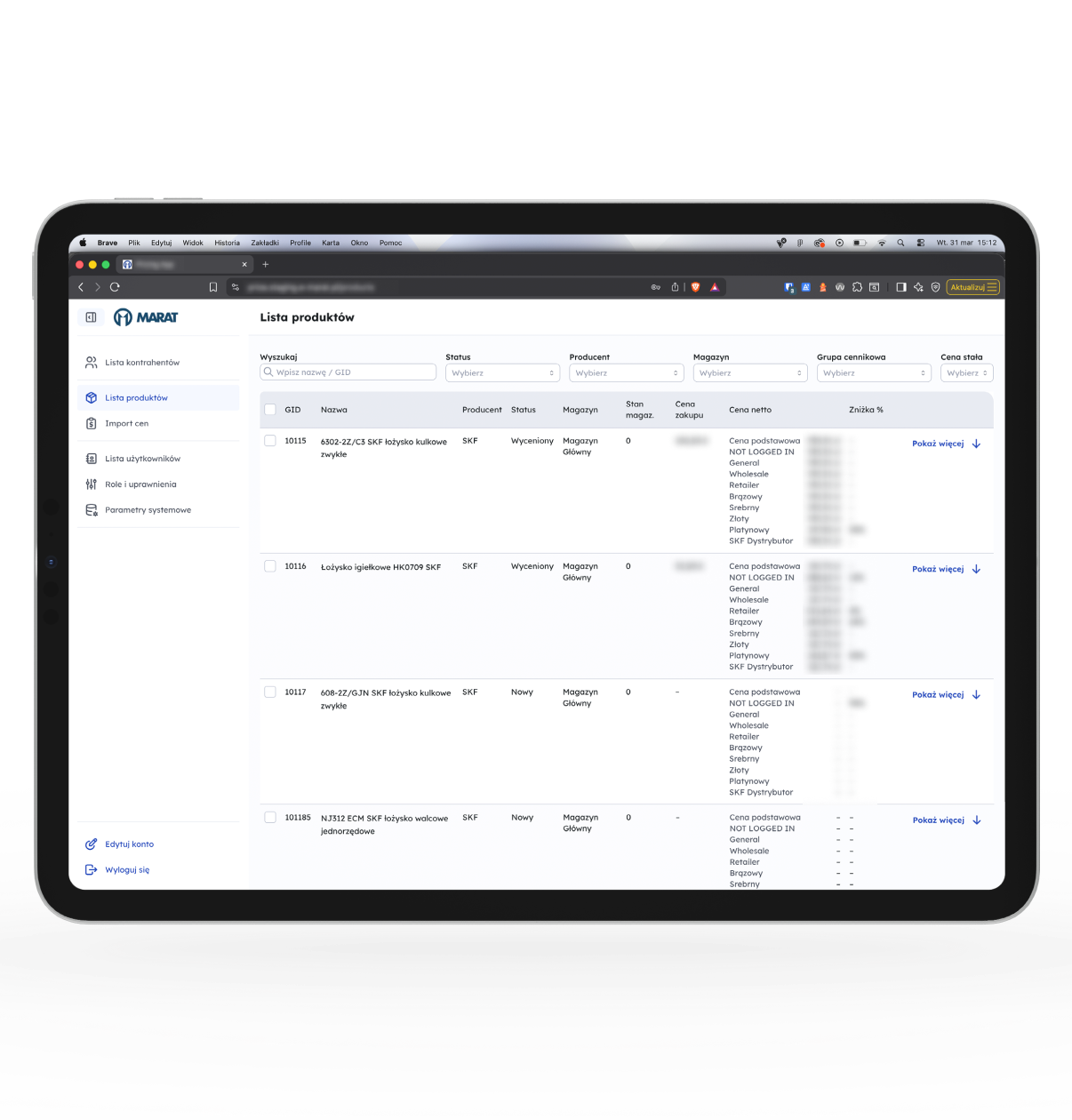
Ergonode PIM implementations – fast and secure product data management
As the product base grows, manual management of product data scattered between Excel, the ERP system and the online store blocks eCommerce development and generates errors in product cards and technical specifications.
Implementing the Ergonode PIM system centralizes the flow of this information in one place, and the intuitive editing view—working like an advanced spreadsheet—drastically accelerates the daily work of the product team. The result? You'll bring new products to market faster and without specification errors, while maintaining full control over your catalog.
What is PIM Ergonode and who is it best for?
Ergonode is a modern PIM system built on a headless (API-first) architecture. Unlike traditional, cumbersome platforms, it prioritizes ergonomics and the speed of human work. It looks like the spreadsheet you're familiar with from Excel—but unlike Excel, it automatically ensures data accuracy and enforces business rules before errors can progress.
Business benefits of implementing Ergonode PIM
Business benefits of implementing Ergonode PIM

Structured product data acceptance process
The workflow module allows you to define content validation and approval paths. Each change is delivered to the right person in the right order. This is crucial in organizations where multiple teams are responsible for data simultaneously.
Photos, certificates and instructions with the product (DAM)
Ergonode has a built-in DAM module – multimedia files are assigned directly to the product, which eliminates the problem of materials scattered across private folders and network drives.
Built-in AI functions for working with content
Native AI modules support the generation and translation of product descriptions. This is especially noticeable with large, multilingual catalogs – instead of completing each card manually, AI creates a first draft, and the team verifies it.
No need to host or maintain infrastructure
Ergonode operates on a SaaS model – you don't need your own servers or an IT team responsible for hosting. Updates and security are handled by the vendor. Your team focuses on the data, not the infrastructure.
Case study
Get to know our realizations of the PIM Ergonode implementation
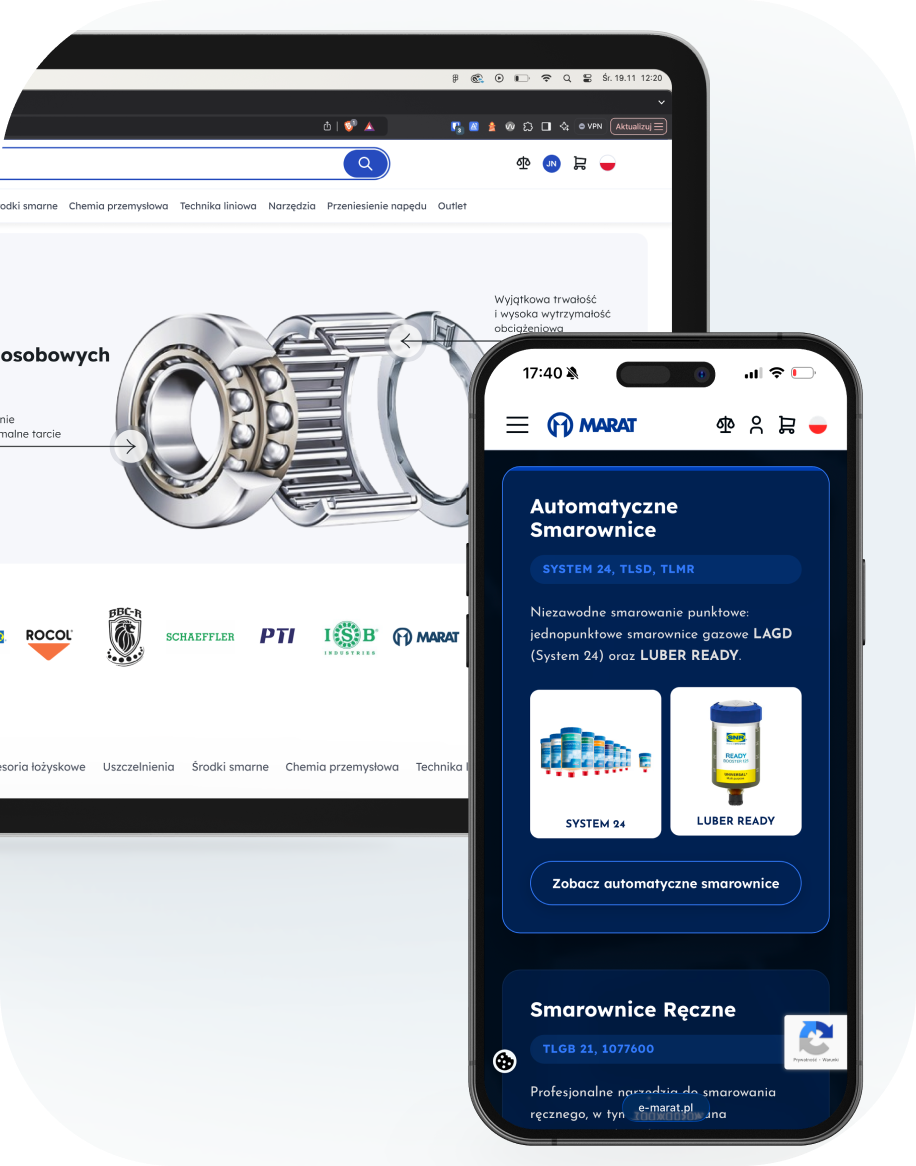
B2B/B2C sales automation for a manufacturer and distributor of industrial goods
Klient
Marat Group
Industry
Production and distribution of bearings, power transmission technologies and industrial chemicals
Range
Sellin implementation, eCommerce consulting, pre-implementation analysis, Magento integration with ERP, PIM integration with Magento, data modeling, back-end development, integration with Comarch XL.
What does the PIM Ergonode implementation process look like – stages and schedule?
We implement iteratively, with a clear division of tasks between Cognize and your team.
01
Needs analysis and modeling (4-8 weeks)
We identify current processes and data sources, and then, together with your Product Managers, we design the category and attribute structure.
02
Launching the project with Ergonode (3-4 weeks)
At this stage, Ergonode, as the system manufacturer, launches the environment, and we coordinate the negotiation of license terms and cooperation with the Ergonode team and the launch of the project.
03
Data migration and integration (2-4 weeks)
Integrations with ERP and sales channels occur concurrently with data migration, reducing overall implementation time. You can handle the data migration and standardization process yourself – if you have the resources in your team, we can guide you through it. If you prefer, we can handle the entire process.
04
Team training and testing (1-2 weeks)
Your team tests mass editing and data flow to the store. We discuss the program's operation using a real catalog, so employees immediately understand how to apply their knowledge in their daily work with data.
05
Go-Live and Support (SLA)
Production launch. We provide a guaranteed response time to any requests.
Technical requirements and integration of PIM Ergonode with other systems
Integration with ERP
Ergonode integrates with Comarch ERP XL, Comarch Optima, and Enova 365 – systems most commonly used in Polish manufacturing and distribution companies. It retrieves base data (indexes, EAN codes, prices) from the ERP, and data exchange occurs asynchronously to minimize system load.
eCommerce integration
Ergonode can connect to the most popular platforms: Magento 2, Shopware, Shopify, WooCommerce, PrestaShop, Sylius, and Sellina . Structured information is delivered to the store via API, and the store simply displays what the team has prepared in PIM.
Marketplace
Ergonode natively integrates with Amazon and Allegro, and tools like BaseLinker and Channelable allow you to connect additional sales channels without separate integrations for each. When data is updated in the PIM, changes are automatically transferred to all connected platforms.
File Management (DAM)
Ergonode has built-in multimedia management functions, but it also integrates seamlessly with external file repositories (certificates, PDF manuals).
Costs, implementation time and licensing model
The cost of implementation depends on the quality of historical data and the scope of integration. The basic components are:
Pre-implementation analysis
This is an optional cost, but it provides a foundation that protects the project against unforeseen costs.
Ergonode PIM implementation and configuration
Priced individually, taking into account integration, functionality and additional work.
Ergonode License
The subscription fee depends on the selected package and the level of manufacturer support.
Implementation time
On average, 3 to 5 months until production launch (Go-Live).
Why consider Cognize as your Ergonode PIM implementation partner?
Several PIM implementations behind us
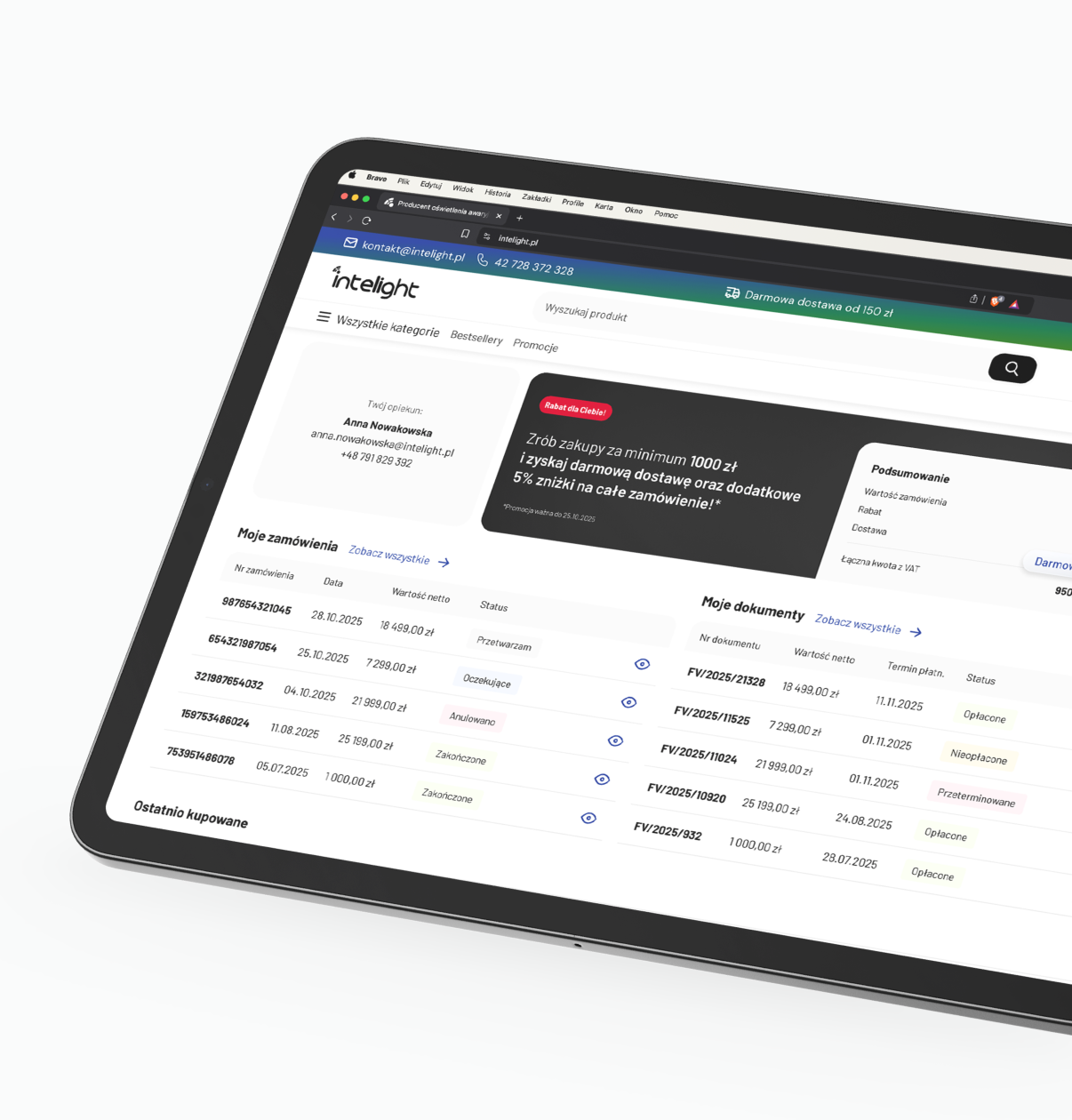
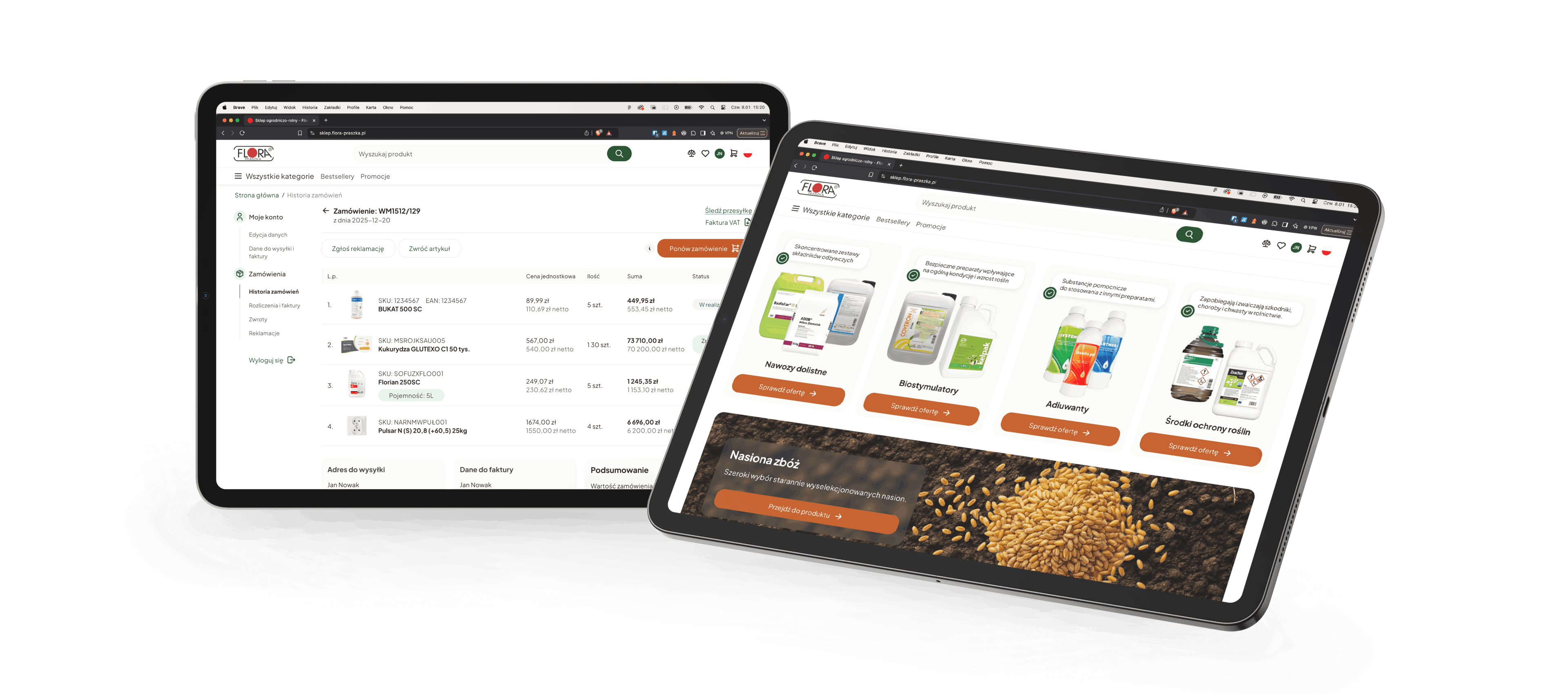
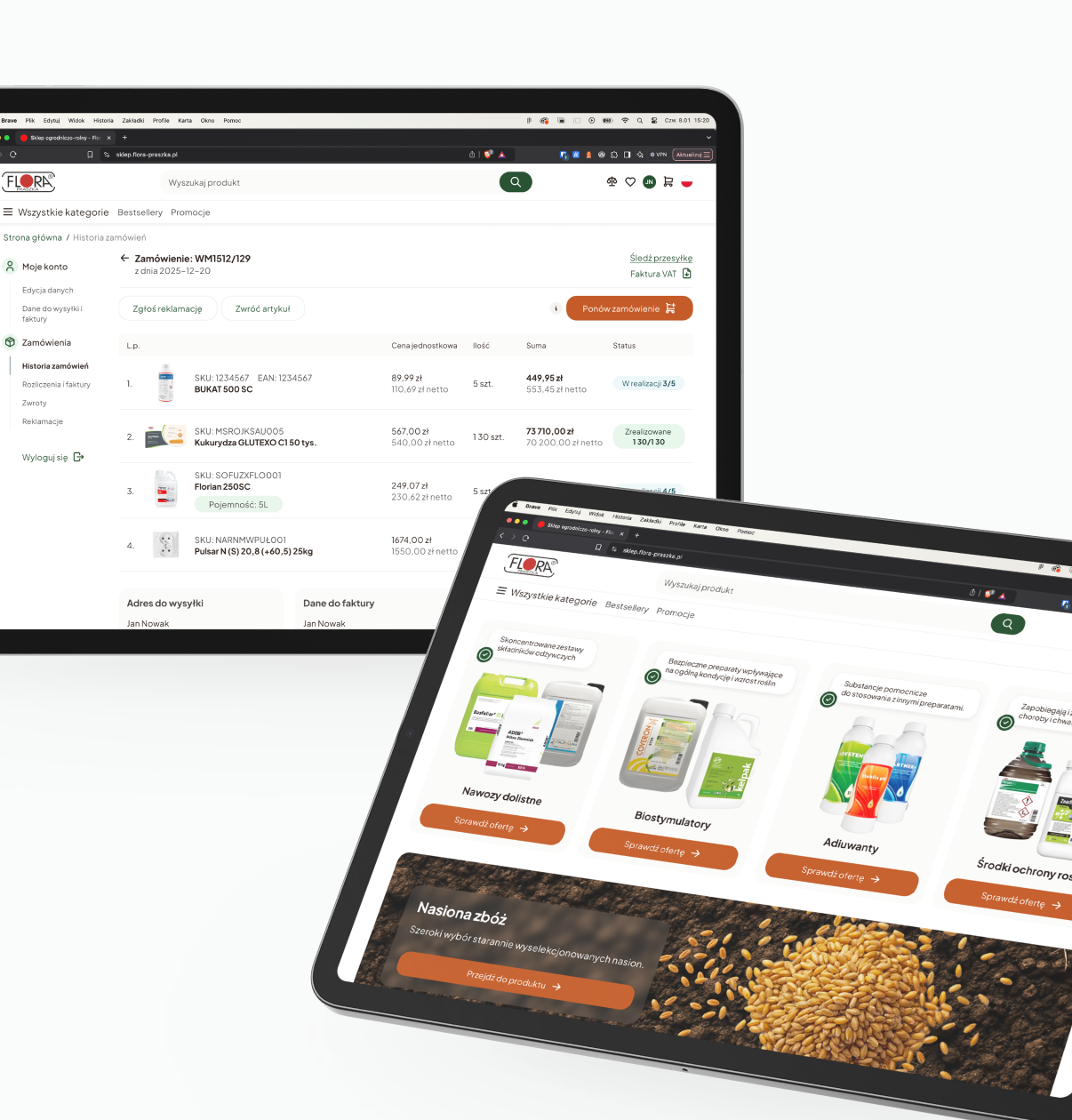
We have documented experience implementing projects for companies such as Astra Polska, FCA, Filtrosfera, and Flora. The largest product database we've worked on includes nearly 2 million SKUs with extensive attribution. This isn't knowledge from documentation—it's knowledge from the project.
We specialize in complex technical product catalogs
We work with companies with challenging product lines: multiple product families, complex attributes, and multiple distribution channels. We know how to design a data model that works at scale and that your team can maintain independently.
We understand your challenges from the inside
PIM implementations are led by a former B2B eCommerce Manager. This means we don't start with system configuration, but with understanding the company's processes. We advise on solution selection, help organize data before implementation, and train the team on how to use the target system.
We guide you through organizational change, not just technological change
PIM implementation typically involves new roles, new responsibilities, and new processes within the company structure. We help define these before the system is deployed to users. This ensures that the project ends with a functioning implementation, not a system that remains unused.
Inquiries
How does the request for quotation work?
We take responsibility for our clients' businesses.
Our approach and effective actions build partnerships that we mutually appreciate.
01
Contact and talk about the project
Contact us and explain your needs. We'll gather all your requirements and discuss your project together (in person or via video call).
02
Specification and planning
We'll work with you to develop project specifications during a workshop at your company. At the end of the meeting, we'll create documentation, a feature list, and a full project plan.
03
Offer and implementation
We will respond to your specifications and present our offer. We will begin the project with a kick-off meeting, during which we will introduce the experts from our dedicated team and present the work schedule.
Request for Proposal Process

What else can we do for your company?
Cognize B2B eCommerce Agency - What do we do?
We offer services aimed at increasing revenue, optimizing processes and improving profitability.
Investment
Implementation and maintenance
integrations
Technology
B2B consulting
Not sure what system you need yet?
Before you decide on a specific technology, it's worth exploring which solution truly fits your sales model. Our experienced B2B eCommerce Manager consultants help companies choose the right direction—without predetermined answers. If you feel it's a good time for a consultation, learn what such a collaboration looks like.


Experience
Experience in your industry
The electrical, heating, lighting, cosmetics, medical, motorcycle, automotive, FMCG, clothing, and sports industries are just some of the industries we have implemented. Ask about our experience in your industry.













What do our clients say about us?
Punctuality, flexibility, availability, professionalism (...)
In 2017, we began working with Cognize (KMK Group) on the BAST system. Since then, the project has been developed and managed with exemplary skill. Cognize's (KMK Group) work is characterized by timeliness, flexibility, availability, professionalism, and, most importantly, the ability to present complex programming solutions in an accessible format.

This cooperation has resulted in our development and stability.
This cooperation has resulted in our development and stability, and the form of business contacts based on mutual trust is increasingly rare today, yet extremely effective.

(…) we can now easily and effectively manage our product catalog (…)
Cognize provided us with two services: Digital Sales Transformation Consulting and PIM Implementation. They provided the necessary know-how and demonstrated methods for various business process integrations with PIM systems. Thanks to their expertise, we can now easily and effectively manage our product catalog while minimizing implementation costs.

They helped us understand our needs and proposed the best solution based on the analysis results.
Our collaboration with Cognize began with a consultation. At this stage, they helped us understand our needs and proposed the best solution based on the analysis results. Cognize then began implementing the final system. The project was conducted with a high level of communication, on time, and, most importantly, with the Cognize team's ongoing initiative.

Immediately after opening the new store, we saw an immediate increase in sales.
After launching the new online store, sales immediately increased. The Cognize team (formerly KMK Group) was able to manage the project independently, working with minimal involvement from the snowboard brand. Their independence and communication skills were also impressive.

(...) we recorded a dynamic increase in our company's turnover
(...) The e-commerce platform they created not only meets all our expectations but also provides enormous opportunities for future technological development. Thanks to the solid technical architecture and innovative features, we have seen dynamic growth in our company's turnover, which we attribute directly to the functionality of the new website. Excellent communication and high availability of the team ensured we could count on support at every stage of the project. (...)

FAQ